Concrete Pumping
From boom pumping to telebelts, we help concrete placement teams deliver best-in-class service with every job.


Portable sanitation operations
Updated October 27, 2026
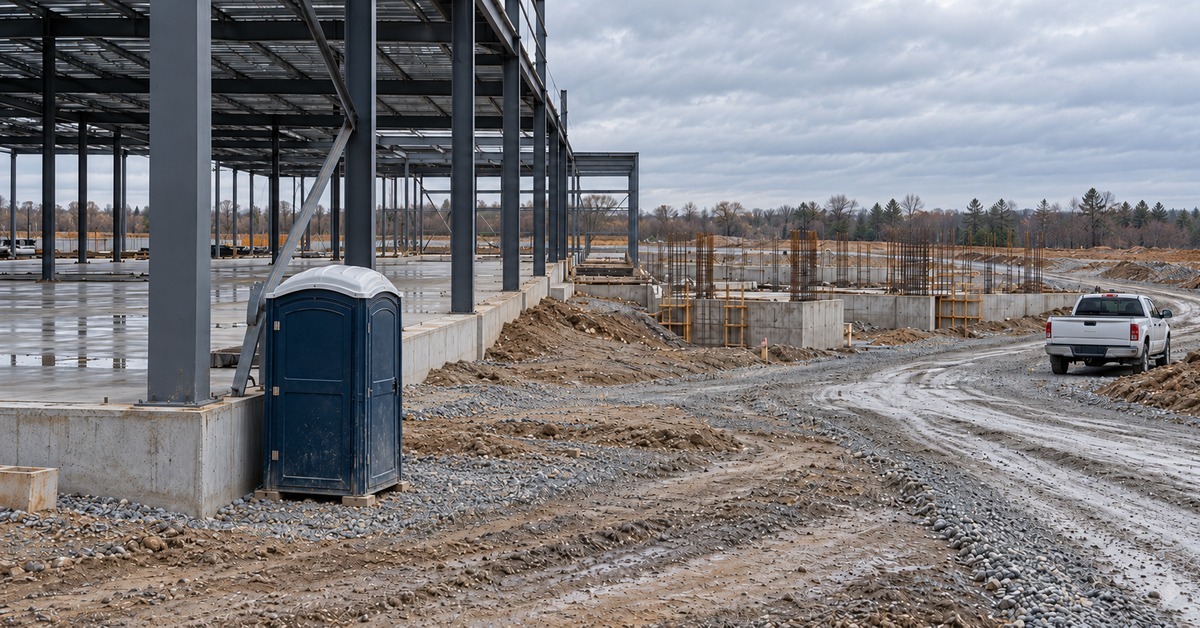
Most portable sanitation dispatchers have had a Thursday like this one. Take Rosa, who runs dispatch for a portable restroom company. Her biggest account is a warehouse project on a large site at the edge of town, built in phases, with eight units spread across it. Ray, the driver who has serviced it since delivery day, is out sick, so the run goes to Tyler, who joined three weeks ago and has never set foot on the site.
Tyler finds the three units by the site trailer in minutes. The other five take him most of an hour. Two are no longer where Ray left them: a crew dragged them out of the way to clear room for a concrete pour, and nobody told the office. Tyler services four, gives up on the last one, and heads to his next stop. At two o'clock the superintendent calls Rosa to ask why the unit by the pour still has not been serviced. It happens to every portable operator, and nobody here did anything wrong. The units moved, and the only map of where they stood lived in Ray's head.
TLDR
Portable toilet software like CRO tracks units on a job site when every unit has its own map pin, set at delivery and repinned by the driver when the unit moves. On a large construction site, run four habits: pin at delivery, one pin per unit, a pin check before a new driver leaves, and a repin on every move.
The job address tells you which customer has the units. It does not tell the next driver where to walk. On a site that changes every few weeks, only a current pin for each unit does that, which is why repinning belongs to the service visit, not to office admin.
Software tracks units on a job site when each unit has its own pin, so the first habit to change is relying on the address alone. On a small job the address is enough, because the units sit where the truck parks. On a large, phased construction site, the address gets the truck to the gate and no further: the units are spread across the site on purpose, and they move as the work moves.
They are spread because crews need them close. OSHA's starting point on a construction jobsite is whether it takes employees less than 10 minutes to get to a toilet, so on a site of several acres the units sit in clusters near each work area, not in one row by the gate.
Once the units are spread out, Rosa's Thursday shows how the map drifts, and most dispatchers will recognize the rest:
A unit on a large site needs a second line after the street address, the way federal 911 rules expect a suite or apartment number after the street address. On a construction site, that second line is a pin.
A placement routine is four habits that keep a current pin under every unit: pin at delivery, give each unit its own pin under the one site address, check the pins before a new driver leaves the yard, and repin the moment a unit moves. Here is how Rosa set it up when phase two of the warehouse project started, two weeks after Tyler's lost hour.
A few minutes of habit cost less than the lost hour. Suppose a driver new to a site spends 25 extra minutes hunting for units on each visit, and the site is serviced twice a week. At the May 2025 median wage for light truck drivers of $21.57 an hour (U.S. Bureau of Labor Statistics), that is about $9 a visit, or roughly $935 a year for one site, before fuel, the overtime when the route runs late and the call from a superintendent whose unit was missed. Put in your own search time and service frequency.
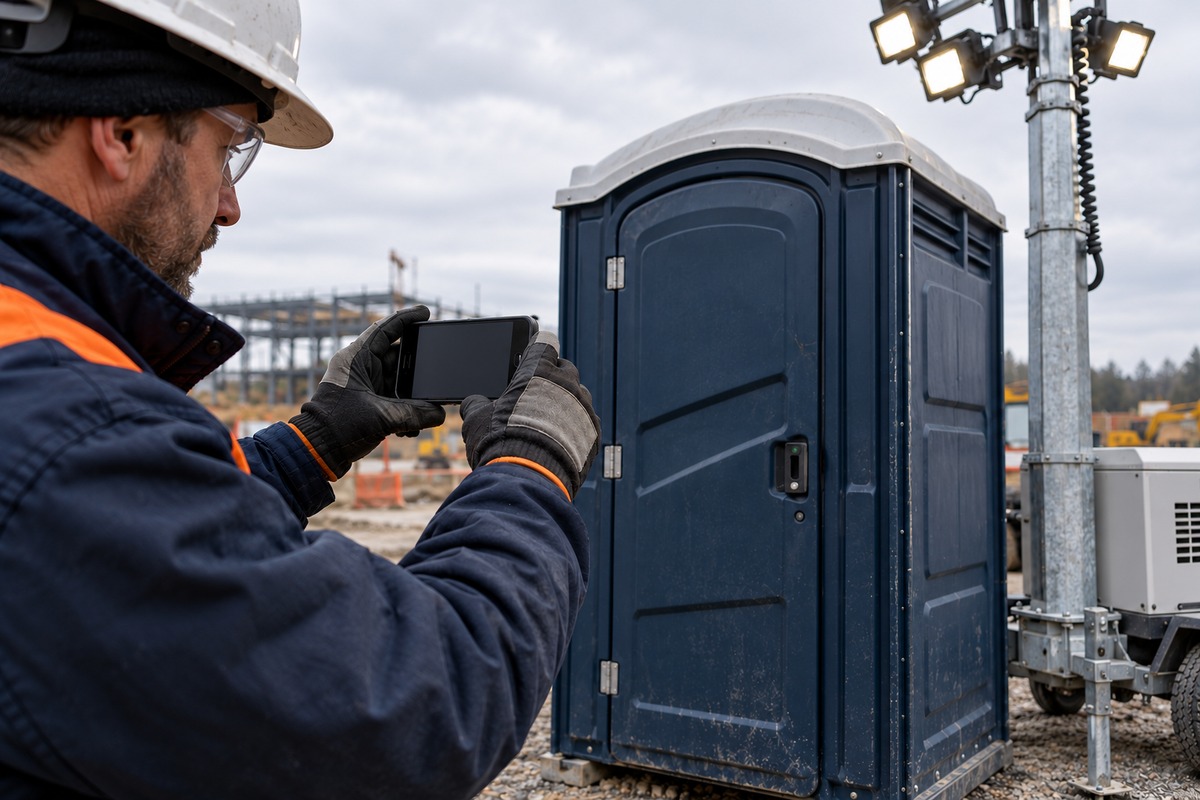
A pin needs to be precise enough to send the driver to the right spot, with the photo doing the rest. A pin dropped from a phone is good to a few yards, not to the inch.
According to GPS.gov, GPS-enabled smartphones are typically accurate to within a 4.9 m (16 ft.) radius under open sky, and less accurate near buildings, bridges and trees. A peer-reviewed field test by Krista Merry and Pete Bettinger in PLOS ONE found an average horizontal position error of 7 to 13 meters for an iPhone 6 in an urban environment. On an open dirt pad, that is close enough to walk straight to a unit. Next to a steel frame or a row of site trailers, two units a few yards apart can sit inside the same margin of error. That is why step 1 pairs every pin with a photo and a note. If a driver arrives and the unit stands well away from its pin, treat it as a move and repin it.
The site decides, and the pin records it. Agreeing safe placement spots with the site manager stays part of the delivery plan, because no map pin turns a bad spot into a good one.
At delivery, walk the spots with the superintendent and settle the practical points: clear of haul roads and equipment, on level ground, close enough for the service truck to reach, and within that 10-minute walk for each crew. The sanitation fact sheet that OSHA points contractors to, from the National Association of Women in Construction, adds that toilets should be well lit, ventilated and in a secure area, with privacy and locks. Ask, too, which areas will change in the next phase, and place units where the next phase will not put them in the way.
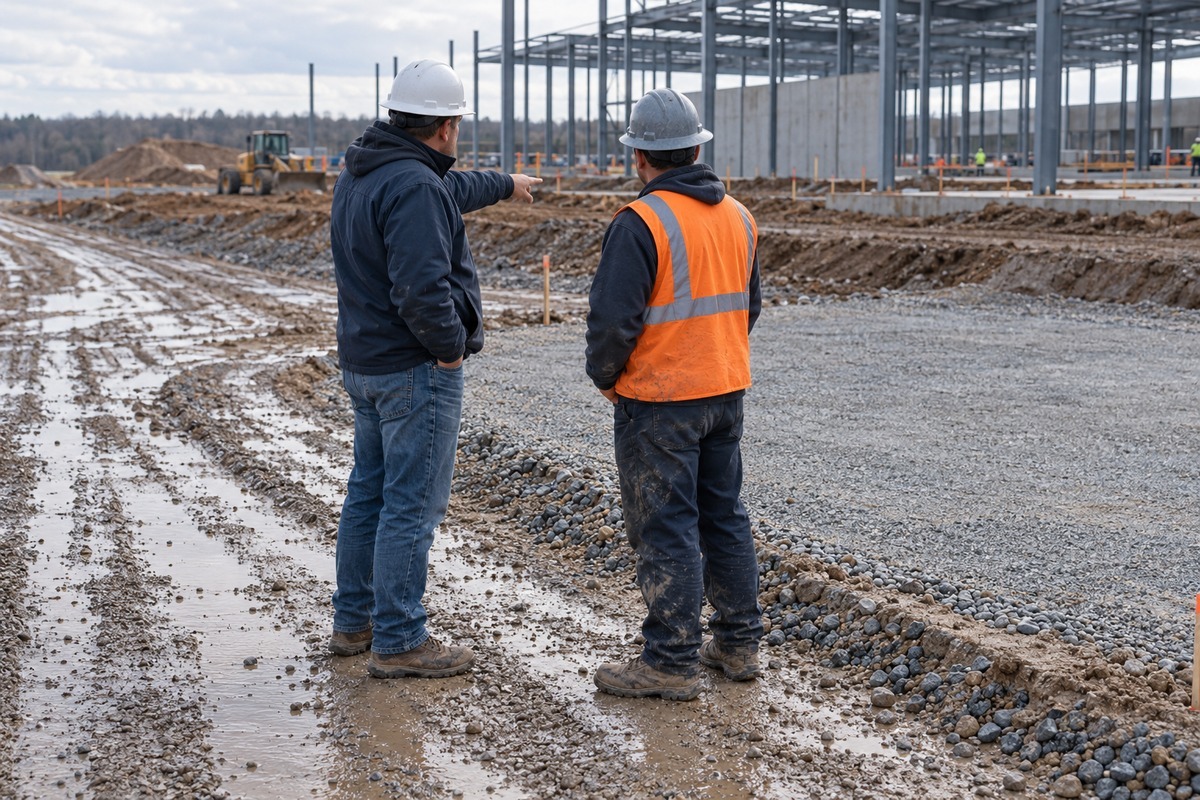
Pins will not stop crews moving units, and they are not meant to. When a pour or a crane lift is coming, a unit will get dragged, and the crew is right to do it. The routine exists for the moves nobody can prevent: the conversation at delivery cuts their number, and the repin keeps the map current for the rest.
With CRO, the pin is part of the driver's visit, not a separate system. Drivers pin the exact placement of each unit on a map, including multiple pins at a single location, so the office knows where each unit is, not just which customer has it. More than 700 waste and site service companies trust CRO to run their operations, and the placement routine leans on these parts of it:
That combination is what makes the routine reliable: the pin a driver sets on the east pad is the pin Rosa checks at the dispatch desk before the next run. You can see how it fits the rest of a portable operation on our portable sanitation page.
On the site itself, the pin shows where a driver last set or confirmed the unit. If a crew moves a unit between visits, its recorded pin does not follow that move automatically; someone needs to update it. That is why step 4 stays a habit and the superintendent's text still helps. Finding units across one site is one piece of keeping them; for the cost of units that go missing altogether, see five steps to stop losing portable toilet assets, and for counting units back after an event, see our event closeout guide.
With pins in place, the next run is a walk from pin to pin rather than a search. Three weeks into phase two, the warehouse run went to Tyler again. Ray had repinned two units on Monday after a crew moved them for a trench. Before Tyler left the yard, Rosa spent five minutes on the pins with him: eleven units, eleven pins, two moved this week. Tyler serviced all eleven, photographed each one, and repinned one more unit he found moved, pushed behind a stockpile since Monday. The superintendent did not call.
The routine did not make the site stand still. It made sure the next driver knew where the site had moved. When the customer adds or removes units mid-job, our guide to recurring portable toilet service when units move or counts change covers the schedule and billing side. For the placement routine itself, here is a checklist you can pin up by the dispatch desk:
Try it on your largest site this week, starting with the next run that goes to a driver who has not been there before.
Want to see every unit on your largest site pinned on one map before the next driver heads out?
Look for software where drivers set a map pin for each unit at delivery, several pins can sit under one site address, drivers can repin a moved unit from the field, and drivers can record photos during service visits. That keeps each unit's location current for the next driver.
The next driver finds it when someone has repinned it. Ask drivers to repin any unit they find moved before servicing the next one, and ask the superintendent to tell the office when crews move units. The next driver then works from the current pin and the photos from the last visit.
Not to run a placement routine. Driver-set pins and landmark photos can help crews find units without fitting a GPS tracker to each toilet, provided the records stay current. Because a pin shows where a driver last set or confirmed the unit, the repin habit still matters.
OSHA's construction standard requires one toilet for 20 or fewer workers, then one toilet seat and one urinal per 40 workers, and per 50 workers at 200 or more. OSHA's interpretation letters also look at whether workers can reach a toilet in less than 10 minutes, so large sites usually need units spread across work areas.
GPS.gov puts smartphone accuracy at about 4.9 m (16 ft.) under open sky, and worse near buildings, bridges and trees. Pair each pin with a photo that shows a fixed landmark so the driver can tell which unit is which.