Concrete Pumping
From boom pumping to telebelts, we help concrete placement teams deliver best-in-class service with every job.



Portable sanitation operations
Updated October 27, 2026
Here is a spring morning most portable toilet owners have lived through. Take Mark, who runs a portable toilet rental company with about 400 units and five service trucks. At 7:40 on a Tuesday in late April, a general contractor calls to add six units to a hospital expansion that starts in mid-May. Ten minutes later, a festival organizer emails asking for 30 units and three handwash stations for a weekend in June. Mark opens the unit spreadsheet, waits for it to load, sees 52 units available in the yard, and says yes to both.
On Saturday his yard lead walks the rows and counts 31. The other 21 are out there somewhere: some at jobs that wrapped up over the winter, some added to a site by phone and never logged, a few that nobody can place. Two new drivers start in May, and his most experienced driver services a handful of accounts that exist only in his head. None of this makes Mark careless. Almost every growing portable company carries a little of it through the slow months, and busy season is when it all comes due at once.
TLDR
Get a portable toilet rental business ready for busy season a month early: put every recurring account on a standing route, give every unit on your books a confirmed place, promise event weekends against a real count, and have new drivers run real stops before the first big weekend. Software like CRO can auto-dispatch permanent recurring routes so the office can focus on the exceptions.
Busy season is won or lost a month before it starts. Peak weeks pile event orders, bigger crews and new drivers on top of the weekly route, and the office only has room for them if that weekly base runs without anyone rebuilding it.
Busy season catches companies off guard because demand rises from three directions at once, and all three draw on the same office hours, trucks and units.
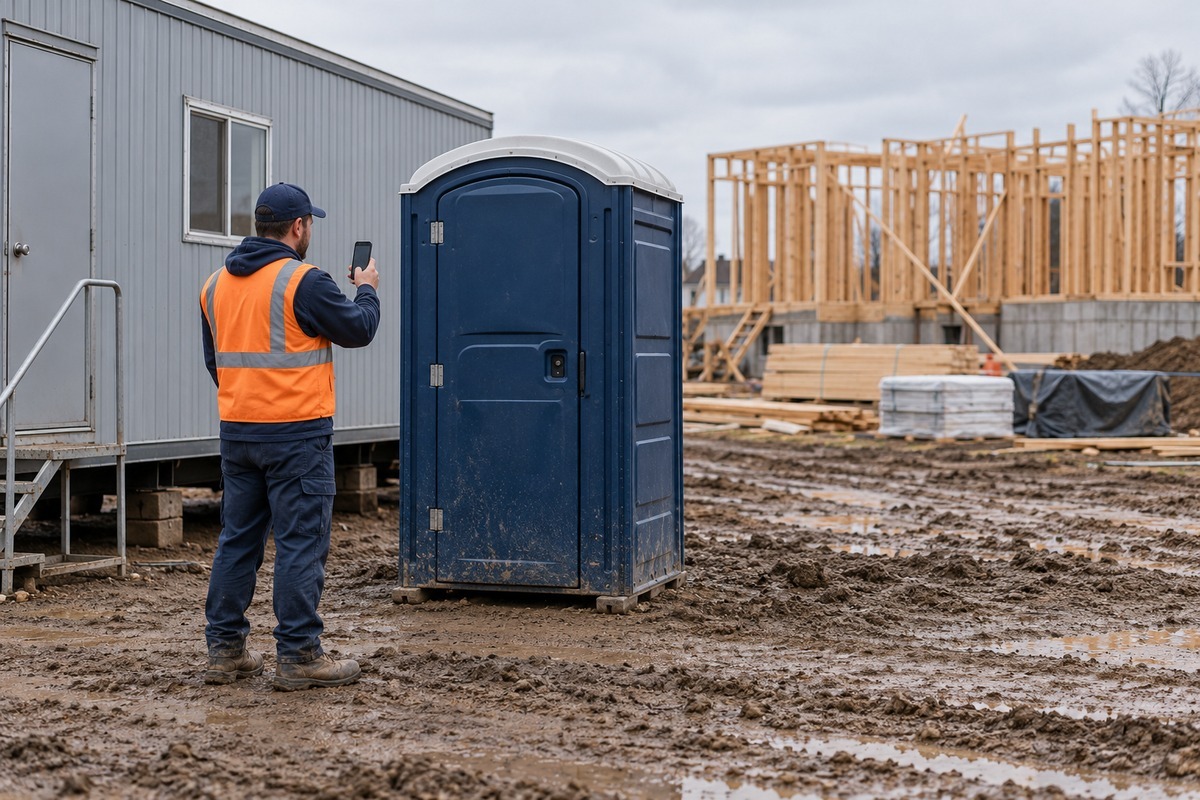
The first is construction. Crews grow in spring, and every worker needs somewhere to go. Under OSHA's construction sanitation rule, a jobsite with 20 or fewer employees needs one toilet, and a larger site needs one toilet seat and one urinal per 40 workers. So when a contractor's crew grows in spring, a recurring account you already serve asks for more units on the same route.
The second is events. Festivals, fairs and weddings stack up on weekends, and the unit count depends on local rules: Arkansas requires at least one toilet per 100 people in attendance and one handwash station per ten toilets, while Santa Barbara suggests one per 250 to 300 attendees. Mark's festival expects about 3,000 people, so we suggest asking each organizer what their permit requires before you quote.
The third is people. The new drivers you hire for the season start just as the routes get heaviest, and the weekly base does not shrink while they learn. If a dispatcher has to rebuild it by hand every week, there is no time left for anything else.
A month before peak, a portable toilet company should have four things in place, each with a simple test you can run in an afternoon:
Here is how Mark worked through the list in the four weeks after that Saturday count.
Start from the invoices, not the route sheets. Every account you bill on a recurring cycle should appear on exactly one standing route, on its service day, and the gaps between the two lists are the stops that only live in someone's memory.
Mark's office manager checked April's recurring invoices against the route sheets. Eleven accounts were on no route at all; her senior driver simply knew to stop there on Thursdays. They went onto routes that week, so the stops would survive his first day off in June. She also asked her construction accounts how big their spring crews would get. The hospital expansion was the only one set to grow past 20 workers in May, the point where OSHA's table moves from one toilet to a toilet seat and a urinal per 40 workers.
We suggest settling holiday changes now, too: Memorial Day and the Fourth of July can each move a weekday route. Once the season starts, our guide to managing portable sanitation routes without losing your evenings picks up from here.
Count once, in one sitting, against one list: the yard first, then every open job. The difference between the two is your exception list, and it is almost always bigger than anyone expects.
That is not a sign of a sloppy office. A unit list gets edited by several people across a whole winter, and a spreadsheet that looks about right is not proof that it is.
Mark's count turned up 21 units the spreadsheet called available:
When the pickups came back, Mark had 46 units in the yard, not the 52 the spreadsheet had promised. We also suggest counting handwash stations and accessible units on their own lines, because event permits ask for them by number (federal ADA standards limit the share required to be accessible in each public cluster to 5 percent; Santa Barbara asks for 10 percent). If units keep going missing between counts, our five steps to stop losing portable toilet assets cover the everyday habits.
Promise event weekends against the counted yard, after the weekly base is covered, and keep a small spare for the unit that gets damaged or the customer who calls on Thursday. Here is test 3 run on Mark's festival weekend:
| Line | Units | Where the number comes from |
|---|---|---|
| Units on the books | 399 | About 400, less the one unit written off after the count |
| Out on standing routes and open jobs | minus 353 | The weekly base: recurring accounts and open construction jobs, including the 5 units logged after the count |
| In the yard | 46 | Matches the Saturday count once the 12 winter pickups and 3 found units were back |
| Hospital expansion add-on | minus 6 | Joins a standing route from mid-May |
| Festival, one June weekend | minus 30 | About 3,000 attendees at one toilet per 100 people |
| Spare for damage and late calls | minus 4 | Our suggestion: hold back about one unit for every 100 you own |
| Left to promise that weekend | 6 | Enough for one wedding, not two |
So the test passes: 359 units on standing routes and open jobs plus 30 promised to the festival come to 389, which fits inside the 399 he owns with 4 spare and 6 still free.
Against the spreadsheet's 52, Mark would have quoted a June wedding six units he did not have. Against the yard his lead walked on that first Saturday, he would have been short before the festival trucks left.
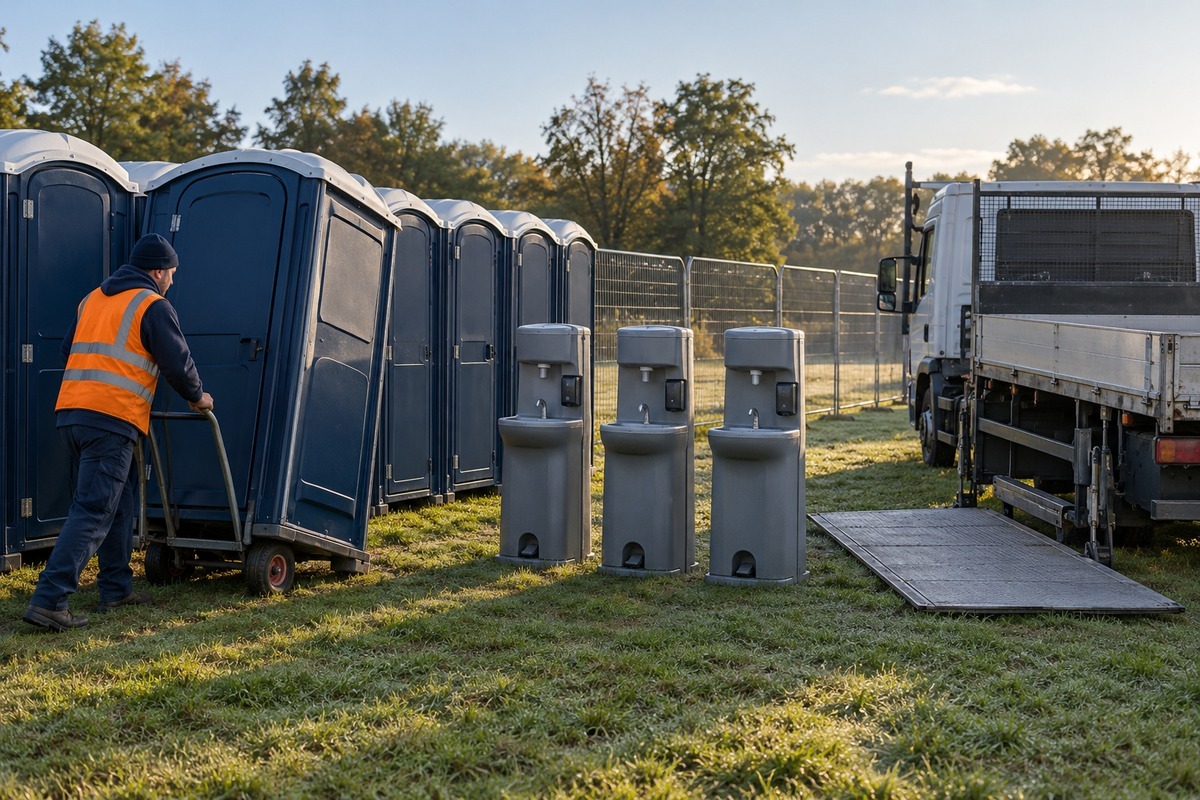
The count is only half of an event order. We suggest writing down delivery and pickup times for each event at least a week ahead; Santa Barbara asks organizers for exactly that. Then decide which trucks come off the weekday routes on the Friday, so the standing stops still get done. For the pickup side, our guide to event closeout and which units are actually back takes over.
Put new drivers on real weekday stops in the app at least two weeks before the first event weekend, so their first busy Saturday is not their first time closing out a stop.
Mark's two new drivers started in early May. Each rode along with his senior driver for two days, then ran a quiet Tuesday route alone, closing every stop with a photo and the unit's location and messaging the office from the app. We suggest one more check: ride the rural routes once and note where phone signal drops, so a new driver is not surprised halfway through a run.
Unfamiliar sites cost new drivers the most time, which is why a pin at every unit matters most to the driver who has never been there. Our guide to getting route drivers to use the app covers the rollout in more detail.
The best software for a porta potty rental business is the one that runs the weekly base on its own, so your office has room for event orders and new drivers in peak weeks. Test any system against the checklist above: does it keep standing routes running without a rebuild, show where every unit sits, and put a new driver's day on their phone?
That is the job we built CRO to do, and more than 700 waste and site service companies trust it to run their dispatch, drivers and billing. These are the parts that matter most before busy season:
That is what keeps the weekly base reliable in peak weeks: the next driver can access the assigned route and recorded unit locations in CRO without retyping them. On a festival Friday, that means the standing routes dispatch themselves while the office works on the event.
Don't just take our word for it. Matthew at Chamberlin and Wingert has a project in his area that comes around every seven years: setting up about 300 toilets, which once took five men two weeks. He completed it with CRO.
Some things stay with you. How many people you put on the busiest weekend, and where each unit stands on a site, are still your calls and the site manager's.
One more suggestion, if you are weighing a change. A month before peak is a hard time to switch every system at once. If your current setup will get you through, run the checklist on it now and move in phases during the slow months: standing routes first, then a few drivers, then event work.
When the work is done early, the first big weekend is busy but ordinary. On Mark's festival Friday, two trucks came off the weekday routes after lunch, and 30 units and three handwash stations went out against a counted yard. On Saturday one of the new drivers ran the festival service visit on his own, found every unit by its pin, and swapped a damaged unit from the spare. Nobody spent Friday night rebuilding Monday.
The checklist did not run the weekend for him. It cleared the office so he could. Here is the same list, spread over the four weeks before your peak:
Start this week by printing next week's routes and putting them beside the recurring invoices. Whatever does not match is the first thing to fix before the phone starts ringing.
Want to see your standing routes, unit pins and event orders in one place before next season?
The best software for a porta potty rental business runs your recurring routes on their own, shows where every unit sits, and puts each driver's day on their phone. That frees the office for event orders and new drivers in peak weeks. Test any system against those three jobs before you buy.
A month before peak, have every recurring account on a standing route, every unit on your books in a confirmed place, every event weekend promised against a real count with a few spare units, and every new driver trained on real stops in the app before the first big weekend.
It depends on the local rules, the crowd and how long the event runs. Arkansas requires at least one toilet per 100 attendees and one handwash station per ten portable toilets, while Santa Barbara suggests one per 250 to 300 attendees. Ask the organizer what their permit requires before you quote.
Under OSHA's construction sanitation rule, a jobsite with 20 or fewer employees needs one toilet. A larger site needs one toilet seat and one urinal per 40 workers, and a site with 200 or more needs one of each per 50 workers. Ask contractors about crew size before the season starts.
At least two weeks before the first event weekend. A day or two of ride-alongs followed by a quiet weekday route on their own, closing every stop with a photo and the unit's location, means their first busy Saturday is not their first time using the app.