

Concrete Pumping
From boom pumping to telebelts, we help concrete placement teams deliver best-in-class service with every job.








Roll-off operations
Updated November 22, 2026
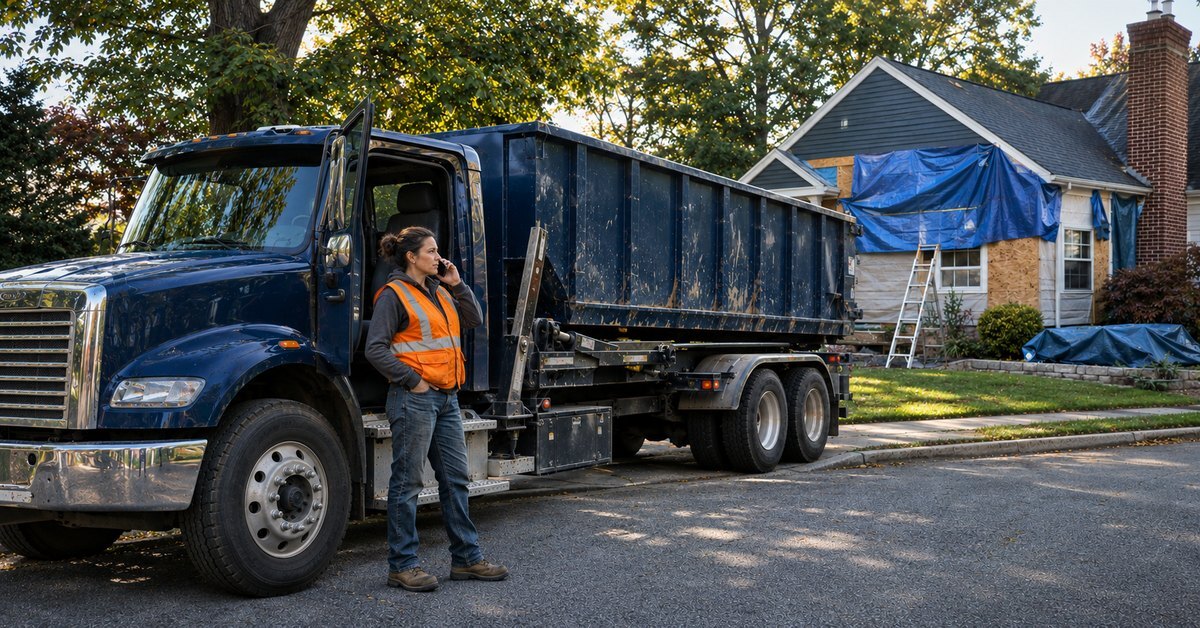
At 8:10 a.m., a contractor emails Ben, the dispatcher, to say the kitchen remodel is paused and today's 20-yard dumpster isn't needed. The truck carrying it left the yard at 7:55. We've all been there: the customer thinks the job is canceled while the driver is still heading to the site. A delivery canceled after dispatch is confirmed only when the driver acknowledges the new instruction and dispatch records where the truck and container actually ended up. Only then does the office apply the accepted rental terms to any charge.
TLDR: Treat a cancellation that arrives after dispatch as a change request until the driver acknowledges it and dispatch records where the truck and container really are. CRO lets dispatchers update a driver's route in real time and reach the driver through in-app messaging. Then check the accepted terms before any fee, refund or credit.
No. The customer's email changes what they are asking for; it does not change where the truck is. At 8:10 the 20-yard is still on the back of a roll-off truck somewhere between the yard and the site, and Dana, the driver, is still on her route.
That gap is why we suggest keeping two facts apart on every late cancellation: what the customer asked for, and what physically happened. An email, a voicemail or a portal message is evidence of the request. It is not evidence that the delivery stopped.
So the job stays open, with the request noted against it, until Ben knows which job the customer meant, where it was when the driver got the change, and what the driver did next.
Start by matching the message to one specific job, because contractors rarely have only one. The email mentions today's dumpster, and Ben's board shows two jobs for this contractor today: the 20-yard delivery to the paused remodel and a 30-yard swap at another site that is still going ahead.
We suggest matching on the site address, container size, scheduled date and job number, not just the customer name, and confirming that the person who emailed can make changes for that site. If anything is unclear, call the customer back before you call the driver; a two-minute call costs far less than turning around the wrong truck. Our guide to deciding whether two swap messages are one job or two uses the same matching habit for duplicate requests.
Ben reaches the contractor at 8:13. They mean the 20-yard at the remodel, job 4417, and only that job. The next question is how far it has gone.
The right response depends on the job's last confirmed status, not on the time the email arrived. The further the job has gone, the more you need from the driver before anything is confirmed.
| Job status | Dispatch action | Driver confirmation | Customer and billing note |
|---|---|---|---|
| Request received, not assigned | Cancel on the board; note who asked and when | None needed; no driver has the job | Confirm in writing; check terms before any charge |
| Assigned, truck still in the yard | Remove the job from the route and tell the driver | Driver confirms the job is off and the container stays | Confirm in writing once the driver replies |
| En route | Send the change and hold the job open | Driver acknowledges once safely stopped; reports position and load | Say the stop is being confirmed; decide charges later |
| Arrived or dropped | Treat a container on the ground as placed | Driver reports whether it was set down, with photos | Now a pickup; terms decide delivery, trip and rental charges |
Job 4417 sits in the third row. Dana left at 7:55 and the job shows in progress.
You know the driver got the change when the driver answers it, not when the office sends it. Until Dana acknowledges the new instruction, the stop is unconfirmed, however clearly the message was written.
Reach the driver in a way that keeps the phone out of their hand. Federal rules for commercial motor vehicle drivers ban texting while driving and using a hand-held mobile phone while driving, and both count sitting in traffic or at a light as driving. The CDC's guidance on distracted driving at work goes further and advises employers to ban all phone use, hands-free included, in company vehicles. We suggest a simple house rule: dispatch sends the change, and the driver pulls off somewhere safe, reads it and replies before doing anything else.
In CRO, dispatchers assign trucks and drivers on a live board, and routes appear instantly in the driver app and can be updated in real time. Drivers see their assigned routes and full job details on their device, and in-app messaging keeps the conversation between driver and dispatch inside one system instead of scattered across personal texts. Ben updates Dana's route at 8:15 and messages her. Her reply at 8:19, sent from a gas station lot, comes back through the same app.
If no reply comes, the stop is not canceled. CRO's dispatch board shows job progress in real time, so while Ben waits he can see whether job 4417 has been closed as complete.

Record the last confirmed physical state of the truck and the container, in the driver's own report, before telling anyone the delivery is canceled. Dana's reply says she was about ten minutes from the site, has not unloaded, and is heading back with the 20-yard still on the truck. Recording customer requests next to the work actually performed is a core task in O*NET's dispatcher profile, and this is exactly that. At 8:46 she confirms the container is back in the yard, and the job can close as a delivery that did not happen.
We suggest the same short checklist every time, whoever is on the desk:
The checklist also catches the moment a cancellation stops being one. If Dana had set the 20-yard down at 8:12, the contractor would be asking for a pickup of a placed container, a new trip with its own place in the rental terms. Record the drop as it happened, with the driver's photos, and schedule the pickup rather than pretending the delivery never took place.
If your team records a turned-back delivery as a failed job, CRO can require a reason and photos before a job is marked failed, and the office can then reschedule, reassign or charge a dry run without losing the job history. Our checklist for days that don't go to plan covers failed trips in more depth.
Tell the customer what physically happened, with times, and only after the driver has confirmed it. A quick reply at 8:11 saying the job is canceled is a promise the office cannot yet keep.
Ben's first reply, at 8:14, says he has the request and is reaching the driver now. His second, at 8:48, says the driver turned back before reaching the site, the 20-yard is back at the yard, and nothing was placed. He adds that the office will confirm any charges under the accepted rental terms, and says when.
Check what the customer may already have seen. Customers who use CRO's customer portal receive automatic email updates when a job is dispatched, completed or failed, so this contractor may have a dispatch email next to their own cancellation.
A late cancellation costs only what the customer's accepted terms say it costs. Billing needs the driver's report and the accepted terms, and neither was settled at 8:10. The City of Redlands, California, publishes roll-off terms with a trip charge when a request is canceled after the container has been delivered, and a separate charge when a container isn't ready for pickup. That is one public operator's rule, not an industry standard.
For job 4417, if the terms the contractor accepted name a charge for a delivery canceled after the truck has left, billing applies it and explains it with the driver's record. If the terms say nothing, we suggest not inventing a fee after the fact. Decide whether to waive the trip or offer a credit, then tighten the terms for future bookings. Our list of nine online booking controls includes testing a cancellation before customers ever see the booking button.
If the contractor prepaid through online booking, for example by card in CRO's customer portal, any refund or credit follows the recorded outcome, not the email. CRO's customer portal lets customers pay online by credit card and view their invoices and payment history, so settle the outcome on the invoice the contractor sees there. For consumer credit cards, Regulation Z treats a charge for services not delivered as agreed as a billing error the cardholder can dispute, and the FTC's guide to disputing charges tells cardholders to get their letter to the issuer within 60 days of the first bill showing the error. A contractor paying with a business card is generally outside these consumer rules, because Regulation Z exempts credit extended primarily for a business purpose. If you are still choosing how customers book and pay, our guide to account and checkout booking models covers where prepayment fits.
A closed late cancellation is one the customer, the driver and billing all describe the same way. For job 4417, that means Dana's acknowledgment at 8:19, the 20-yard back in the yard at 8:46, both customer messages in writing and a charge decided from the accepted terms. Nobody had to piece the morning together from an email and a phone call.
If any piece is missing, the cancellation is still open, however settled it felt at 8:11.
Bring a delivery that changed after dispatch to a CRO demo. We will follow it through the live route update, the driver's in-app reply and the job details your office uses to decide what happens next.
Not as things stand. The Eighth Circuit vacated the FTC's 2024 click-to-cancel amendments on July 8, 2025. The FTC reopened the rulemaking with an advance notice in March 2026, and as of November 22, 2026 its rule page lists no new proposed rule. The existing Negative Option Rule covers only prenotification plans. Your accepted rental terms and any state rules that apply to you still govern, so keep cancellation terms clear at booking. Either way, a late cancellation is confirmed when the driver acknowledges the change and dispatch records where the container is.
No. Federal rules for commercial motor vehicle drivers ban texting and using a hand-held mobile phone while driving, including while briefly stopped in traffic or at a light. The driver should pull off the road to a place where the truck can safely stay stopped, then read the change and reply.
Treat it the same way: it is a request against a job, not proof that anything stopped. Match it to the job, check whether it is already assigned or en route, and get the driver's acknowledgment before confirming to the customer.
Refund or credit once the driver's report shows what was delivered and billing has checked the accepted terms, and tell the customer when to expect it. We suggest completing that check quickly, because a consumer card payment for services not delivered as agreed can be disputed with the card issuer.