

Concrete Pumping
From boom pumping to telebelts, we help concrete placement teams deliver best-in-class service with every job.







Roll-off operations
Updated November 22, 2026
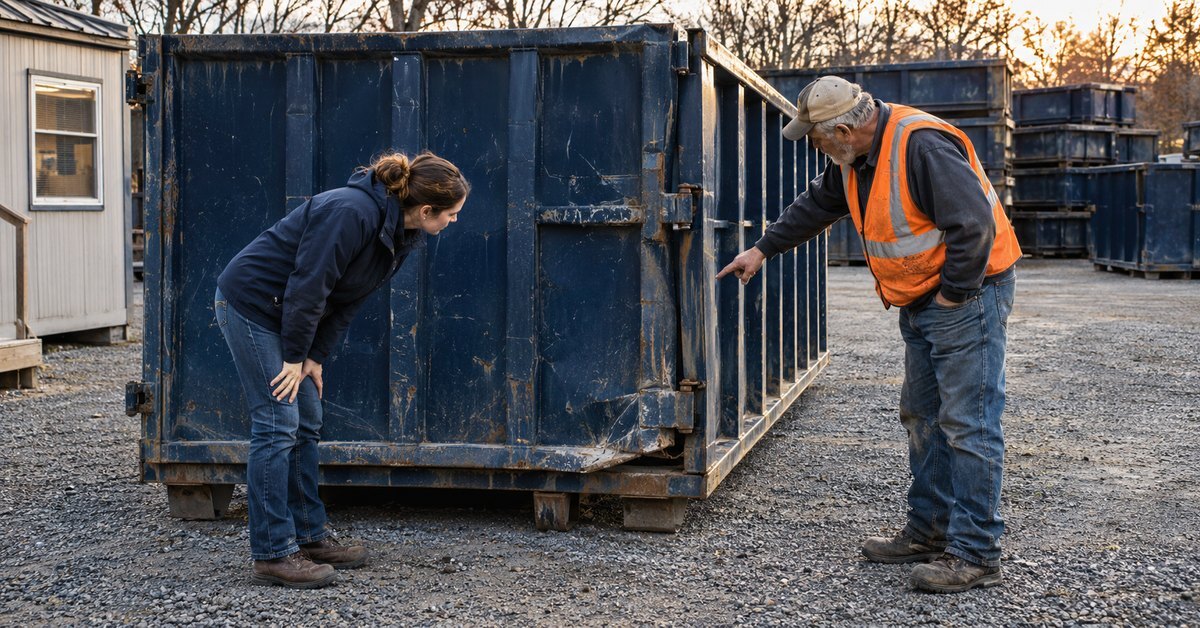
At 4:30 p.m., Dev, the yard lead, texts Carla a photo of a cracked door hinge on unit 214, the 20-yard dumpster she put on a roofing crew's 7 a.m. delivery an hour ago. We've all had that moment when the board says a unit is ready and the yard says otherwise. The fix is simple to say: hold 214's next assignment the moment damage is reported, name who assesses it, and confirm tomorrow's customer with a replacement or a revised delivery. A completed pickup never releases a unit by itself.
TLDR: Treat a damaged return as unavailable until a named person releases it, and settle its next delivery tonight. In CRO, each job carries its assigned unit and the driver's drop-off and pickup photos and notes, so dispatch can compare both jobs before deciding.
Knowing where your dumpsters are starts with the unit number, the job it sits on and where it was last placed, from a driver's map pin or a GPS tracker. That is only one piece of tracking them. Dispatch also needs to know each unit's condition and which job it is already promised to. Until someone says otherwise, a returned unit with a damage report is unavailable.
A completed pickup tells dispatch that unit 214 left the customer's driveway; it says nothing about whether 214 can go back out. Keeping track of where a dumpster is tells you it is back in the yard, not that it is ready. The pickup job closes when the driver hauls the dumpster away. The readiness question opens when it lands in the yard, and someone has to answer it before the next delivery leaves. On Carla's board the two jobs overlapped. She assigned 214 to the roofing delivery at 3:30 p.m., an hour before Dev walked around the unit, because the pickup showed as finished.
O*NET's profile of dispatchers lists both halves of Carla's job: sending equipment where customers need it, and the task to "Arrange for necessary repairs to restore service and schedules." A damaged return is where those two duties meet.
Sending a returned unit out before anyone has looked at it is a dispatch error, and a rule prevents it better than extra care. We suggest one house rule: a returned unit with an open condition report is unavailable until a named person releases it. That turns Dev's text into a status change rather than a message buried under the next phone call. OSHA's safety program guide recommends the same thing in general terms: a simple procedure for workers to report the hazards they find. OSHA's hazard identification guidance applies the same logic to equipment in general: hazards creep in as equipment wears, so it suggests documenting inspections, photographing problem areas and later checking that the condition was corrected.
Trace the unit number, not the size, because 214 is the thread that ties this afternoon's pickup to tomorrow's delivery. GS1's guidance on returnable assets describes identifying equipment that goes out, comes back and is used again, including in rental systems.
Try these four steps as soon as the damage report arrives:
Step 2 is the one that gets skipped: a colleague or a recurring schedule may have made the next assignment, so search every future job for the unit number. Our container inventory and itemization guide covers keeping each unit tied to its jobs.
Two sets of photos settle most damage questions: the ones taken when 214 was dropped at the last customer and the ones taken when it came back. If your drivers use an app, these are the delivery and pickup photos it already documents; what matters is that someone compares them. If the hinge was intact at drop-off and cracked at pickup, the damage appeared during that rental. If the drop-off photo already shows the crack, the problem started earlier and slipped through a previous turn in the yard.
That comparison feeds two different decisions. Dispatch needs to know whether 214 is safe to send out tomorrow. The office needs to know whether anything should be raised with the pickup customer under your rental terms. Keep those questions apart: the first can't wait until morning, and the second shouldn't be rushed tonight.
A J. J. Keller roll-off container condition report lists the door hinge, latch and shaft as separate items beside the floor, side rails, hook and rollers, with columns for both the inspector and the mechanic. We suggest Dev records the same detail on 214: which hinge, whether it is cracked or bent, whether the door still closes and latches, and a close photo plus one of the whole door.
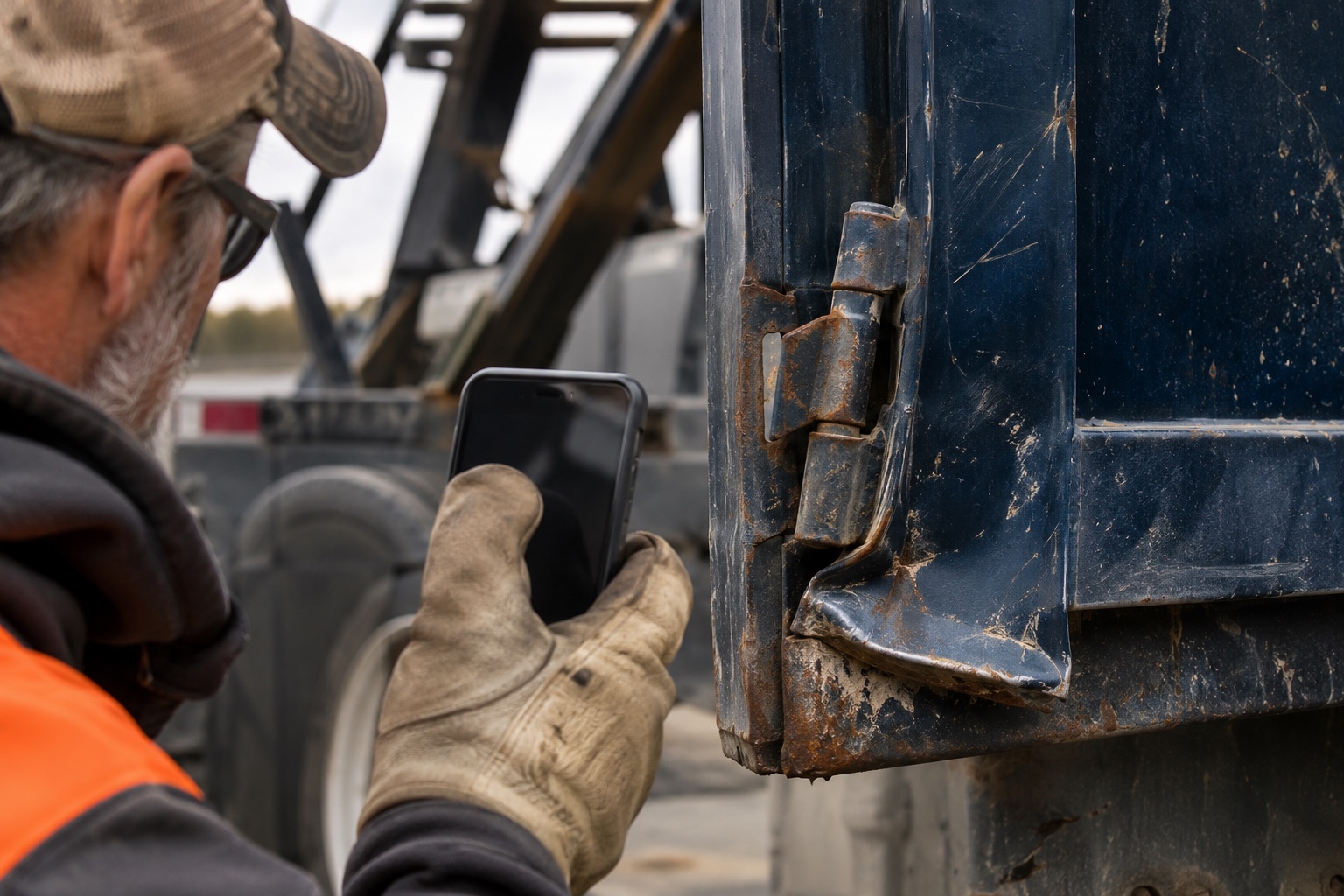
Hinge damage deserves that care. Waste Advantage's container maintenance guidance warns that a tailgate coming loose while loading, hauling or unloading could cause damage or injury, and says to replace broken or misshapen tailgate parts immediately. A heavy steel door on a cracked hinge is also a hazard to the crew. The federal general duty clause expects employers to keep the workplace free of hazards likely to cause death or serious harm.
One named person decides whether 214 goes back out, and dispatch settles tomorrow's delivery around that decision instead of waiting on it. That might be the yard lead, a shop mechanic or an operations manager; what matters is that Carla knows who it is tonight. On the dispatch board, 214's 7 a.m. job gets reassigned or rescheduled this evening, not at 6:45 a.m. Whatever dispatch software you run, the driver's app should show the new unit number or the new time before the shift starts. OSHA's hazard guidance recommends interim control measures that protect workers until a more permanent solution is in place, and holding 214 while that person looks is one of them.
The assessor's checklist can follow your container manufacturer's guidance and the industry's safety standard for waste containers, ANSI Z245.30. The National Waste & Recycling Association acts as secretariat for the Z245 committee, whose container subcommittee covers the use, maintenance, service and repair of containers.
Then pick one of three paths for the roofing delivery. Each names who owns it, what the customer hears and what goes on the record, so a damaged unit never turns into a dispatch error at 7 a.m.
| Situation | Dispatch action | Owner | Customer confirmation | Record |
|---|---|---|---|---|
| 214 stays unavailable; a replacement is ready | Assign a same-size unit someone has physically checked in the yard | Carla assigns; Dev confirms the replacement | Confirm the 7 a.m. delivery still stands | Hold on 214, replacement unit number, who checked it |
| Assessor releases 214 | Keep the assignment only after a written release | Named assessor releases; Carla rechecks the job | Confirm 7 a.m. as booked | Assessor's name, finding, time and photos |
| No confirmed replacement | Revise the delivery before the driver's shift | Carla, or the office manager, calls tonight | Agree a new time or size with the customer | Revised time, who agreed and why |
The middle row covers the common case where the damage turns out to be cosmetic: a scuffed panel or a dent that does not touch the door, hinges, latch, hook or rails. We still suggest recording who looked, what they found and when they released it.
If the damage sits near the parts that hold the dumpster on the truck, put that in the release note so the driver can check it before loading. Federal rules for roll-off and hook-lift container securement require additional tiedowns when front stops or lifting devices are missing, damaged or not compatible. Before driving, the driver must also be satisfied that doors, tailgates and the means of fastening cargo are secured. A yard release does not replace those checks.
CRO helps where the evidence lives, because it keeps the unit assignment and the driver's field record in one system. In CRO, dispatch builds the job and assigns the asset from one customer center, and routes appear in the driver app as soon as trucks and drivers are assigned. The driver app captures photos and notes when a container is dropped off or picked up, and photos, notes and customer signatures attach to the job record. Drivers can also pin exact unit placement on a map, so the office knows where each unit is, not just which customer has it.
For Carla, that means the drop-off photos from 214's last rental and the pickup photos from this afternoon sit on the job records she already works from, not on a driver's personal phone. When she moves the 7 a.m. delivery to a replacement, the change reaches the driver's app, and drivers can update dispatch through in-app messaging rather than a string of texts.
If you are comparing container tracking software, test it against a damaged return: can dispatch see the unit assigned to each job, the drop-off and pickup photos, and where the unit was pinned? Our roll-off container tracking also shows where units sit and how long they have been out. On price, CRO charges a monthly base fee plus a per-truck fee, with unlimited office users and no per-seat fees, so the yard lead and office manager can work from the same records. Condition is the piece your yard adds. CRO does not decide whether 214 is fit to go back out: the assessment, any repair and the release stay with your people. We suggest writing that decision, and the name behind it, where the next dispatcher will see it before 214 is assigned again.
Both jobs are settled when each one has an owner and a confirmed next step. Dev finds the hinge cracked through and the door no longer latches, so 214 stays on hold for the shop. Carla finds unit 231, another 20-yard, has Dev check its door and latch, and moves the 7 a.m. delivery onto it. The roofing crew's delivery stands as booked. Between them, the two jobs hold both sets of photos, and the office manager will review them against the rental terms tomorrow.
The same habit carries into your daily count. If you run an end-of-day count, add a column for open condition reports. Then your record of where every dumpster is also says which ones are ready, and a damaged return never shows up as available stock. Our daily container count covers the count itself, and our event closeout guide explains why a unit coming back is not the same as a unit ready to rent. If the replacement has to come from another yard, our guide to moving a dumpster between yards covers the receiving check.
Bring the two jobs from your last damaged return to a CRO demo: the pickup that brought the unit back and the delivery it was already promised to. We'll trace the unit assignment, the driver's photos and notes, and the replacement decision with you, and you decide who signs off the release.
We suggest tracking each unit by its number, its current job and its condition. Treat a returned unit with an open damage report as unavailable until a named person releases it, and show open condition reports in your daily count.
No. Location tells you where a unit sits, not what state it is in. In CRO, drivers pin unit placement on a map and attach photos and notes to the job, which gives dispatch the location and the field evidence. A person still assesses the damage and decides on release.
Compare the drop-off photos from that rental with the pickup photos your driver app captured. If the damage only appears at pickup, it appeared during the rental. Whether any charge applies depends on your rental terms.
Yes. We suggest assigning a same-size unit someone has checked, making sure the new unit number shows in the driver's app before the shift, and confirming the delivery with the customer. If no checked replacement is ready, call the customer that evening and agree a new time before the driver's shift starts.