


Concrete Pumping
From boom pumping to telebelts, we help concrete placement teams deliver best-in-class service with every job.


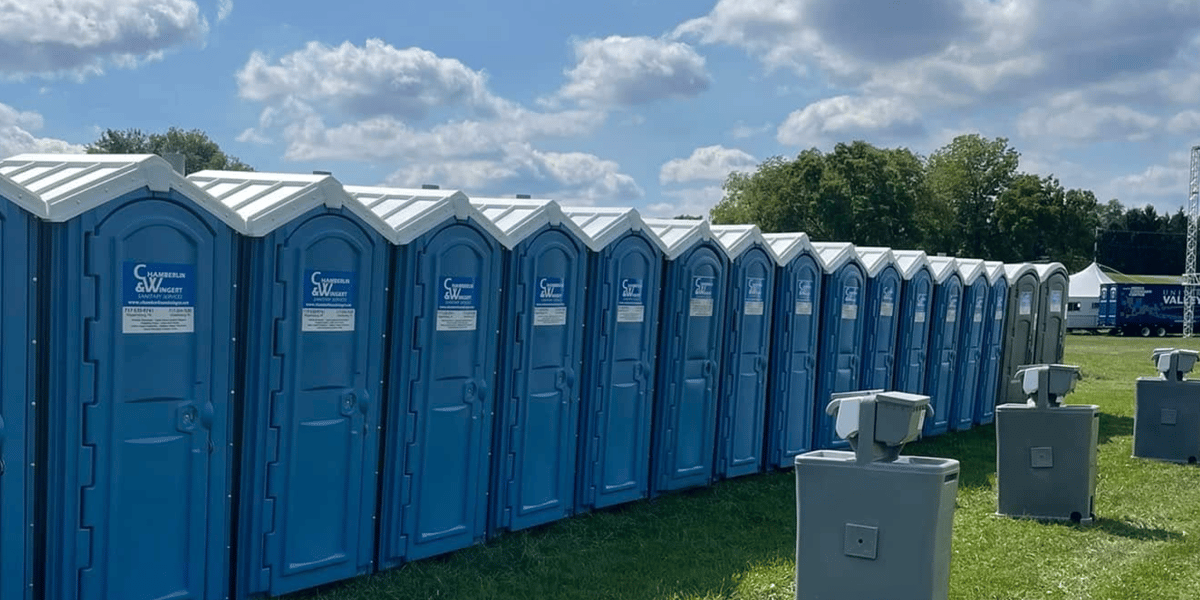
Chamberlin & Wingert is a portable sanitation and septic services company based in South Central Pennsylvania. Operating since 2002, the company manages approximately 1,500 portable toilets, with around 800 units on regular service routes and the remaining inventory supporting events and weekend rentals.
Beyond portable sanitation, Chamberlin & Wingert operates three septic trucks daily and provides mechanical work, repairs, and maintenance services for septic systems.
With a mix of recurring service routes, construction rentals, and large-scale events, keeping equipment, drivers, and deliveries organized is essential to running an efficient operation.
In this story, we hear from Matthew Menzter, Manager at Chamberlin & Wingert, about how adopting CRO helped the company streamline its operations, simplify event logistics, and make better use of its workforce.
Manager
Chamberlin & Wingert saw measurable results the first time they ran a major event on CRO.
✔️ 5 → 1 WORKERS — Reduced setup staffing. A project that previously required five workers was completed with essentially one worker using CRO.
✔️ 2 WEEKS → 1.5 WEEKS — Faster event setup. The team reduced the time needed to complete a large-scale portable restroom deployment.For portable sanitation operators, managing hundreds of portable toilets across multiple locations takes more than simply loading trucks and making deliveries. Every unit needs to get to the right location, drivers need clear instructions, and teams must coordinate their time and resources to keep everything moving.
For Chamberlin & Wingert, that challenge becomes especially apparent during a large conference held in their region approximately every seven years.
The event requires around 300 portable toilets, delivered to a combination of private residences and the main conference site. Coordinating that many units across multiple locations has historically been a significant undertaking.
Before CRO, preparing for the event required five workers spending two weeks on setup alone. Once the event ended, collecting the units took approximately another two weeks with the same staffing level.
For a business also managing regular service routes, septic operations, and other customer commitments, dedicating that much manpower to a single event represented a substantial operational demand.
When the conference returned, Chamberlin & Wingert had a new tool to help manage the workload: CRO. The difference was significant.
With CRO supporting its operations, the company completed the event setup with essentially one worker in just a week and a half, compared with five workers over two weeks during the previous event.
"With the software this past year, we were able to do it with basically one man, a week and a half. I mean, that was incredible."
For Matthew, the biggest benefit was the ability to coordinate the work more efficiently without tying up multiple employees for weeks at a time.
"The logistics and time saving, just being able to be more efficient with our time and more efficient with our manpower."
The improvement was especially meaningful because the employee responsible for the latest setup had also worked on the event seven years earlier. Having experienced both processes firsthand, he could see just how much easier the work had become.
For portable sanitation businesses handling large event rentals, those efficiency gains can make a substantial difference. Reducing the labor required for one major deployment gives operators greater flexibility to support regular service routes and other jobs without stretching their teams as thin.
Implementing new software can be intimidating, especially for businesses with established processes and employees who have spent years doing things a certain way. Chamberlin & Wingert was no exception.
When the company first transitioned to CRO, Matthew recalls that the biggest obstacle wasn't the software itself. It was the team's initial hesitation about changing how they worked.
"Very easy, actually. On the user side, it was just us being nervous."
That hesitation began to disappear as the team became more comfortable with the platform and started trusting the new processes.
"Once we just kind of let [that fear] go and used the software the way we should use it, and it did what it should do for us, it's just been great."
For a business managing hundreds of units on recurring routes alongside event deliveries and septic service work, getting comfortable with a more structured approach to daily operations was an important step.
Rather than relying entirely on familiar habits, the team began embracing the efficiencies that CRO could bring to its workflows.
Like many established service businesses, Chamberlin & Wingert has drivers with a wide range of experience and comfort levels with technology. Their workforce includes employees in their mid-20s as well as experienced drivers in their 50s and 60s.
Matthew acknowledges that some of the longer-tenured employees were initially reluctant to change the way they worked.
"It's been a little bit harder to get some of the older gentlemen to embrace the technology. Once they do, they love it."
For drivers who have spent decades following familiar routes and processes, switching to software-supported workflows can take some adjustment. Younger drivers, Matthew notes, were generally quicker to adopt the technology.
But as the more experienced employees became familiar with CRO, they also began to recognize its value.
The result has been growing acceptance of the software across a workforce with different levels of experience, helping Chamberlin & Wingert move toward more consistent operations.
For Chamberlin & Wingert, successful software adoption wasn't just about the technology. Having access to knowledgeable support also made a difference.
Matthew describes CRO's onboarding and customer support experience as a major positive, particularly when the team was still learning how to use the platform.
"The support that you guys offer is incredible."
Even when employees weren't entirely sure how to explain what they needed, the CRO support team helped them work through their questions and find solutions.
"They were able to answer the questions, even though sometimes we're asking a question because we were really ignorant to how it should work. They were able to figure out what we were really trying to do."
For businesses transitioning from long-established processes to a new operational platform, that level of support can help build confidence and encourage employees to make better use of the software.
As Chamberlin & Wingert moves through a generational ownership transition, operational efficiency remains an important part of the company's future.
South Central Pennsylvania has a strong event market, and the company has built relationships with event vendors that continue to support its portable sanitation business. While demand for construction rentals and recurring route toilets can fluctuate, event services remain an important opportunity.
Having a more efficient way to manage portable restroom inventory, coordinate deliveries, and organize field operations puts Chamberlin & Wingert in a stronger position to handle that work without unnecessary demands on its workforce.
After nearly three years using CRO, Matthew's assessment of the platform's impact is straightforward: it has helped the company become more efficient.
From reducing a major event setup from five workers to one, to helping experienced drivers embrace new technology, Chamberlin & Wingert's experience shows how the right operational tools can make a measurable difference for portable sanitation businesses.
Want to see how CRO can help your portable sanitation business simplify routes, coordinate event rentals, and get more done with your existing team? Book at 15 minute discovery call today!
