

Concrete Pumping
From boom pumping to telebelts, we help concrete placement teams deliver best-in-class service with every job.
/TEST%20icons/noun-concrete-pump-5976240.svg)
/Industry%20Icons/noun-5917380.svg)
/Industry%20Icons/noun-truck-4140346.png?width=60&name=noun-truck-4140346.png)


/TEST%20icons/noun-crane-truck-6830557.svg)
/TEST%20icons/noun-drilling-5103943.svg)


/Industry%20Icons/noun-road-fence-3990160.png?width=60&name=noun-road-fence-3990160.png)

/No%20Background/noun-maintenance-7409171-F1612C.png?width=60&name=noun-maintenance-7409171-F1612C.png)


Quick answer
TrashLab is a credible modern waste platform with strong customer communications, AI-assisted order taking, multi-line operations, dispatch, routing, billing, and driver tools. The best alternative depends on why you are shopping: CRO for connected multi-service operations and container visibility, CurbWaste for a focused cloud roll-off workflow, Docket for dumpster-rental commerce and customer self-service, Routeware for broader collection operations, or Starlight for an ERP-style roll-off and recycling system.
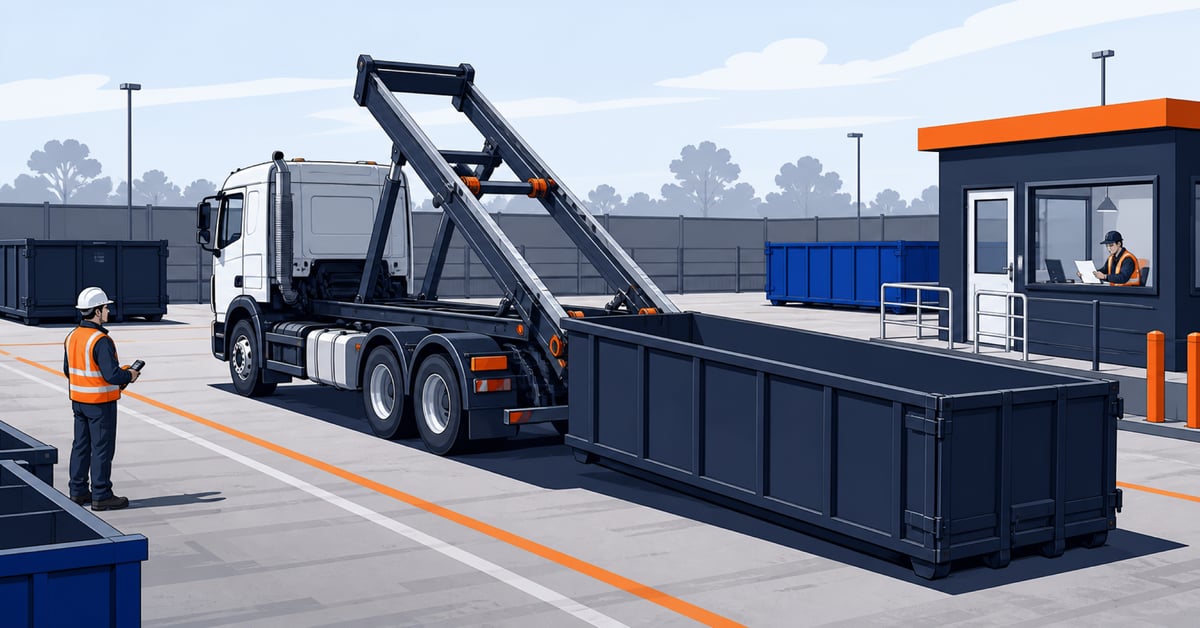
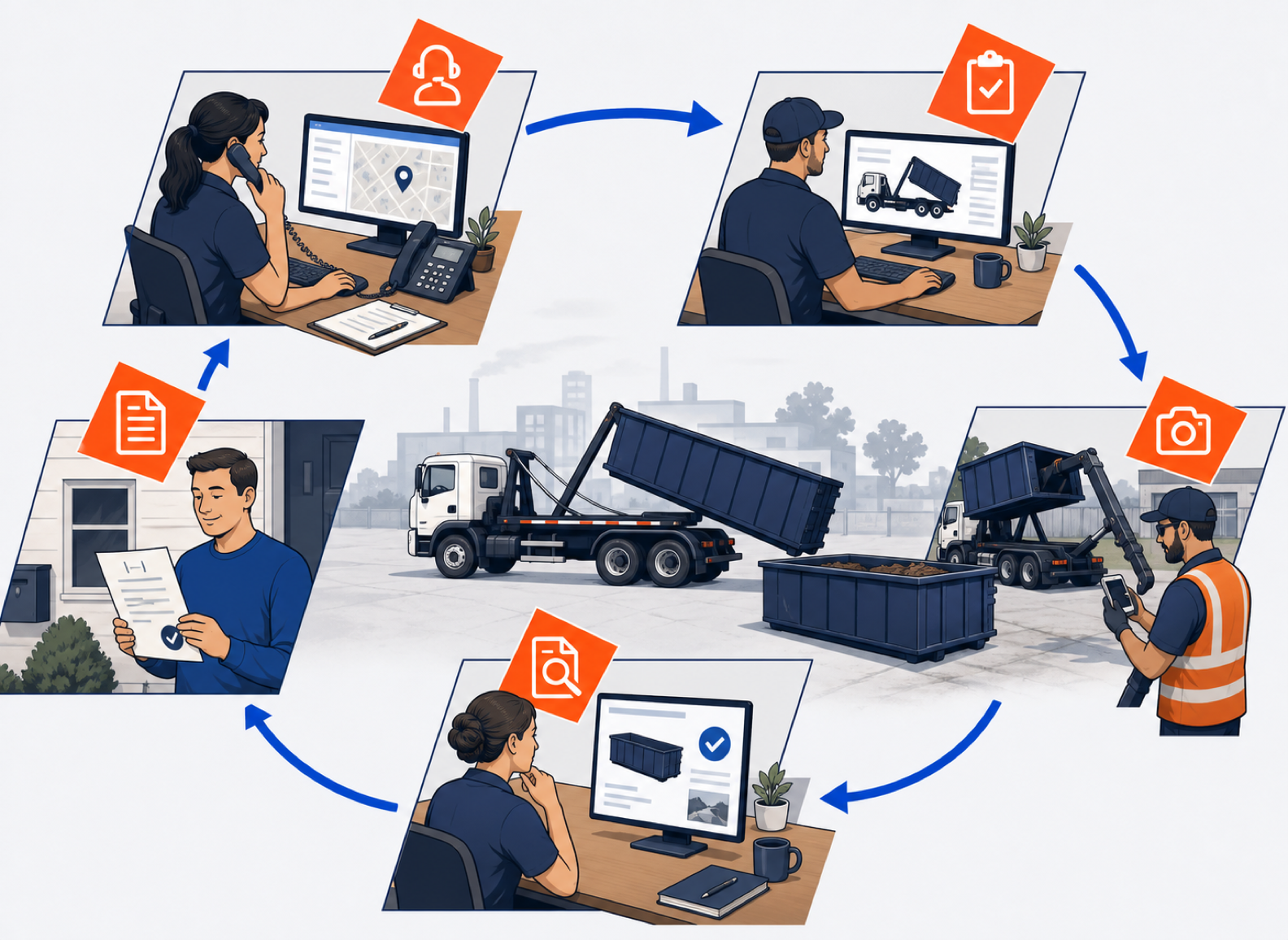
TrashLab has earned serious consideration from roll-off operators because it brings the customer conversation and the operating workflow together. A call, text, email, or AI-assisted request can move into dispatch; drivers receive work in an app; the office can track containers, routes, billing, and reporting. Its current product pages also cover front-load, rear-load, portable toilet, and scale workflows, so it should not be treated as a lightweight point tool.
That is exactly why a replacement search needs discipline. The question is not whether another vendor can show a dispatch board. It is whether that vendor fits the way your dispatcher, drivers, billing team, and customers work on a difficult Tuesday, then still fits after you add trucks or another service line.
We started with the roll-off job, not the software category. Every option had to show a credible path from request to dispatch, driver completion, container status, billing, and customer follow-up. We then looked at the operating questions that create cost after go-live:
Can the dispatcher insert a same-day swap, move work between trucks, and understand what changed?
Can the team find each container, see its status, and identify inventory that is sitting too long?
Is there an app drivers will actually use for job details, photos, notes, and proof?
Do disposal charges, rental days, overages, and proof reach billing without duplicate entry?
Can customers request service, receive updates, and pay without making dispatch the switchboard?
What changes when the operator adds trucks, office users, locations, or another waste service line?
Evidence gate: current first-party product evidence reviewed for every shortlisted option Yes
Two anonymous buyer conversations in RapidWorks' field research shaped the demo test. One operator liked TrashLab's phone and AI workflow but wanted to probe route changes, support, and customer-data flow more deeply. Another described TrashLab as a good system while asking for better confidence in how dispatch updates appeared. Those are individual experiences, not a verdict on the platform. They are useful questions to put to every vendor, including TrashLab.
| Alternative | Best for | Roll-off workflow | Pricing |
|---|---|---|---|
 1. CRO 1. CRO | Multi-service operators and teams that need stronger container visibility | Dispatch, driver proof, container aging, billing, collections, and QuickBooks | Base platform fee plus per truck, with unlimited office users |
 2. CurbWaste 2. CurbWaste | Roll-off teams seeking a focused cloud workflow | Three dispatch views, driver app, inventory, billing, portal, and online ordering | Contact vendor for a current quote |
 3. Docket 3. Docket | Dumpster-rental operators prioritizing online sales and self-service | Dispatch, route tools, driver work, container tracking, billing, and portal | Tiered plans with a custom software quote |
 4. Routeware 4. Routeware | Larger or complex collection operations | Optimization, dispatch, in-cab tools, service, billing, and payments | Custom quote based on fleet, services, and operating needs |
 5. Starlight 5. Starlight | Roll-off and recycling operators that want an ERP-style system | Live dispatch, truck and container matching, driver tools, inventory, and billing | Contact vendor for a current quote |
Best for
Roll-off operators that need container visibility or expect to run more than one service line.
Pricing
Base platform fee plus per-truck pricing, with unlimited office users and no per-seat fee.
CRO connects the roll-off day from the first service request through dispatch, proof, billing, and collections. Dispatchers can manage deliveries, pickups, swaps, dump-and-returns, and day-of changes while container records show location and aging. Drivers receive job details and capture photos and proof in the field. Those records can move into billing and QuickBooks Online or QuickBooks Desktop.
A roll-off-only startup may not need the full breadth on day one. Ask the team to configure your actual rate structure, show container aging and a live swap, then carry disposal weight, photos, rental days, and overages through to the invoice. Confirm implementation scope and every integration in the quote.
Bottom line: CRO is the strongest fit when the replacement decision is about connected operations, container control, or growth beyond one service line.
Best for
Roll-off teams that want a cloud platform centered on dispatch, inventory, billing, and customer service.
Pricing
Contact CurbWaste for a current quote and confirm users, payments, integrations, and implementation.
CurbWaste positions its roll-off product around orders, dispatch, inventory, customer-specific pricing, and billing. Its dispatch product presents three views and lets the office assign work from a map or by drag and drop. The driver app, customer portal, online ordering, billing tools, and QuickBooks integration connect the main customer-to-cash steps.
Bring a job with customer-specific pricing, a failed delivery, a same-day swap, and a container that has exceeded its rental period. Ask exactly how each change reaches the driver, inventory record, customer message, invoice, and QuickBooks. Confirm the current subscription model because a public software total was not available in the pages reviewed.
Bottom line: CurbWaste deserves a close look when the team wants a focused, cloud-based roll-off platform with strong customer and dispatch workflows.
Best for
Roll-off and dumpster-rental operators that prioritize online ordering, customer self-service, and a focused product.
Pricing
Grow, Pro, and Pro Plus plans are public; software subscription totals require a personalized quote.
Docket combines roll-off dispatch, route tools, container tracking, driver management, billing, reports, online ordering, and a customer portal. Drivers can receive jobs, record photos, and capture charges. Customers can request service, follow work, and pay through self-service tools. Docket also presents QuickBooks compatibility as part of the connected office workflow.
Ask Docket to show how an online order becomes a priced job, how the dispatcher changes it after assignment, and which field details reach the invoice and QuickBooks. The pricing page names three plans but directs buyers to a demo for software totals, so confirm included users, messaging, payment costs, route tools, support, and add-ons.
Bottom line: Docket is a strong fit for roll-off-focused companies that want the customer buying experience tied closely to dispatch and billing.
Best for
Larger, multi-location, private, or municipal collection operations evaluating a broad connected platform.
Pricing
Custom quote based on fleet size, services, and operational needs.
Routeware connects collection operations with route optimization, dispatch, in-cab tools, fleet reporting, customer service, outreach, self-service, billing, and payments. Its platform framing is broader than a roll-off-only product and is built to connect the work performed in the truck with office and customer systems.
Do not assume collection breadth automatically equals roll-off depth. Ask for a roll-off-specific demonstration with delivery, pickup, swap, dump-and-return, container status, rental time, and disposal charges. Confirm which modules are required, how they exchange data, and how the quote changes by fleet, service, location, and implementation phase.
Bottom line: Routeware is the best fit here for an operator treating software replacement as a broader collection-operations transformation.
Best for
Roll-off and recycling operators that prefer a broad ERP-style operating system.
Pricing
Contact Starlight for a current quote and implementation scope.
Starlight presents a cloud ERP for roll-off and recycling companies. Its roll-off materials describe live dispatch, truck and container matching, driver tools, billing, inventory, customer records, and reporting. Customer applications can support orders, changes, payments, images, documents, and reports.
ERP breadth increases the importance of implementation detail. Give Starlight one end-to-end job and ask who configures rates, data migration, accounting, customer access, driver workflows, and reports. Confirm every module and integration included in the current quote, plus the ownership of training and post-launch support.
Bottom line: Starlight is a credible finalist for operators that want roll-off dispatch inside a broader ERP-style system and are prepared to scope implementation carefully.
Start with the reason the search began. If dispatch loses confidence when jobs change, test update order and audit history. If containers sit too long, test inventory aging. If invoices lag, carry a completed job with every charge into accounting. If customers overwhelm the phones, test ordering, status updates, and payment. If support is the concern, put response times, escalation, training, and named ownership into the commercial conversation.
Then run one scripted day with every vendor. Use the same customer, container, driver, truck, disposal ticket, overage, photo, and invoice. Change the route after the driver has started. Ask a second office user to find the latest state without calling dispatch. That demonstration reveals more than a feature matrix because it shows how the records behave when the day stops going to plan.
Finally, compare the full three-year cost. CRO uses a base platform fee plus per-truck pricing with unlimited office users. Routeware explicitly scopes a custom quote around fleet, services, and operating needs. Docket publishes plan names but requests a personalized demo for software totals. CurbWaste and Starlight require current quotes. For every option, include implementation, data migration, integrations, payments, support, office users, drivers, locations, and the service lines you expect to add.
CRO is the strongest all-around alternative for an operator that needs container visibility, connected field-to-invoice work, or more than one waste service line. CurbWaste and Docket are strong focused roll-off options, while Routeware suits broader collection operations and Starlight suits an ERP-style approach.
No. TrashLab and TrashFlow are separate products. “Trash Labs” is a common search wording for TrashLab, but it should not be used to merge or confuse the two vendor identities.
A move should start with a specific fit issue, such as container visibility, change handling, accounting flow, support expectations, customer self-service, pricing structure, or plans for additional service lines. TrashLab already covers many modern hauler workflows, so a replacement should prove a clear operating improvement.
CRO is built to run roll-off, portable sanitation, septic and liquid waste, solid waste, and scrap and metal recycling in one system. Routeware and Starlight also present broad operating coverage, but buyers should demonstrate their exact service mix and confirm the required modules.
Model three years of trucks, drivers, office users, locations, integrations, implementation, payments, support, and added service lines. Compare the same growth case for every vendor and ask what triggers a price change. The useful number is the total operating cost, not a single starting quote.
Use one real workflow: create a customer request, dispatch a delivery, change the route, swap the container, record disposal and overage charges, capture driver proof, update container status, and produce the invoice. Then ask another office user to find the latest state and explain what changed.
Bring a real delivery, swap, overage, and invoice to a CRO discovery call. The best comparison is the one built around your trucks, containers, team, and growth plan.