Concrete Pumping
From boom pumping to telebelts, we help concrete placement teams deliver best-in-class service with every job.
/TEST%20icons/noun-concrete-pump-5976240.svg)
/Industry%20Icons/noun-5917380.svg)
/Industry%20Icons/noun-truck-4140346.png?width=60&name=noun-truck-4140346.png)


/TEST%20icons/noun-crane-truck-6830557.svg)
/TEST%20icons/noun-drilling-5103943.svg)


/Industry%20Icons/noun-road-fence-3990160.png?width=60&name=noun-road-fence-3990160.png)

/No%20Background/noun-maintenance-7409171-F1612C.png?width=60&name=noun-maintenance-7409171-F1612C.png)


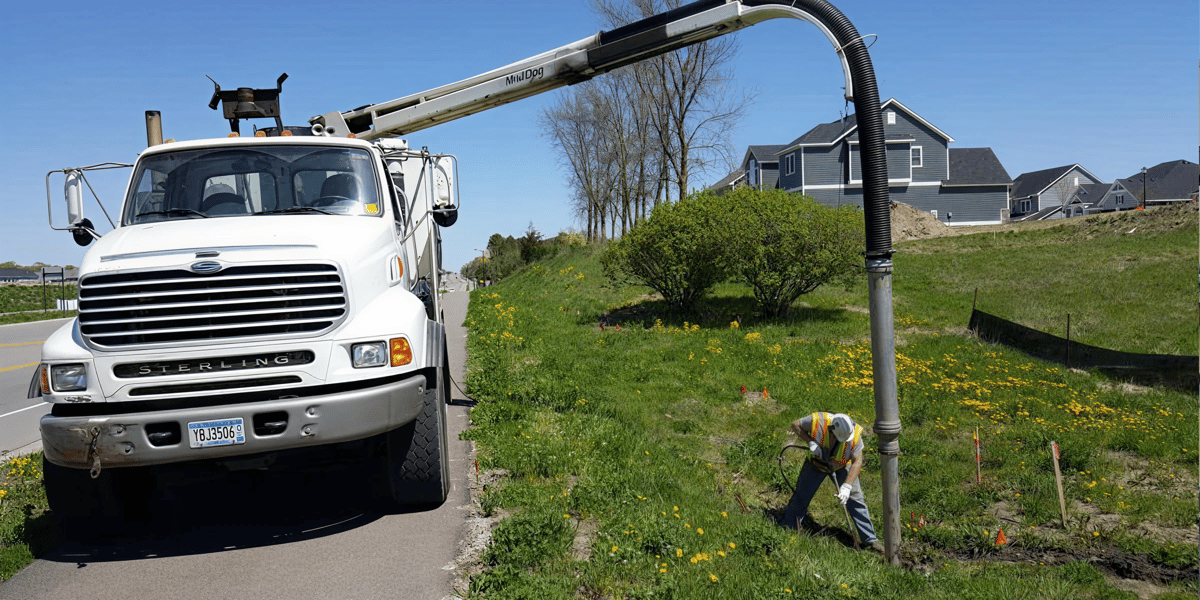
Hydro-Vac Inc. (HVI) is a Minnesota-based provider of hydro excavation, sewer jetting, and sewer televising services. With a fleet of specialized equipment—including VAC trucks, sewer jetters, and inspection units—HVI operates in a highly coordinated environment where field execution and back-office alignment are critical to profitability.
Like many hydrovac and underground service businesses, HVI manages complex workflows across crews, equipment, and job sites. From DVIR logs and job tickets to dispatch coordination and invoicing, every step depends on accurate, timely data moving between the field and the office.
In this testimonial, Caleb Fouss, Chief Operating Officer at HVI, shares how RapidWorks helped the company eliminate costly inefficiencies, improve dispatch and data flow, and unlock new growth across service lines.
Chief Operating Officer
HVI has seen measurable results since using RapidWorks. From daily time savings to real time results for business tracking, the platform improves efficiency every day.
✔️ Eliminated six-figure revenue leakage risk by replacing lost paper job tickets with a fully digital workflowBefore implementing RapidWorks, HVI relied heavily on paper-based processes to manage job tickets and field documentation. That approach created a major operational risk.
“The year before we started using RapidWorks, we actually lost $154,000 in revenue because of lost paper job tickets.”
For a business running multiple crews and high-value equipment like hydrovac excavation trucks and sewer jetters, missing job tickets didn’t just create inconvenience—it directly impacted revenue, billing accuracy, and cash flow.
At the same time, the back office was overwhelmed with manual processes:
“We were spending four to eight hours every week doing manual entry… taking the manual written job tickets and putting them into our payment portals.”
This is a common bottleneck in hydrovac operations where field crews generate critical data (job tickets, DVIR logs, site notes), but there’s no reliable system to move that data into billing and dispatch workflows.
After experiencing the operational inefficiencies of their manual process, the HVI team knew they needed to make a change. HVI had tried other software solutions before, but they weren’t built for the realities of hydro excavation.
“We were paying all this money for an expensive software that actually wasn’t built for our industry. We were just making it work.”
When they evaluated RapidWorks, the difference was clear:
“RapidWorks was clearly made for the hydro excavation industry. They knew the bottlenecks, they knew the problems that they needed to solve.”
That industry alignment—especially around job tickets, dispatch workflows, and field-to-office communication—was a key factor in their decision.
Today, HVI uses RapidWorks across its entire operational lifecycle—from job intake to invoicing.
Field crews use mobile devices to complete job tickets, capture images, and log job details in real time. “If they need to take a picture of a job site, they just snap the picture," Fouss explained. "And then we immediately see it in the office.”
This eliminates lost paperwork and ensures every job is documented and billable.
With a centralized dispatch system, incoming jobs and updates flow directly into scheduling.
“It’s literally just like a tube that flows back and forth from the office to the field,” Fouss shared.
Dispatchers can assign crews, optimize route density, and manage equipment utilization without delays.
Customers can request services directly through a mobile app, reducing friction in the booking process. Fouss described how seamless process has become, sharing “customers can request any of our services… and [the request] pops right into our scheduling screen.”
This is especially valuable for repeat customers managing multiple job sites and service types.
HVI also uses customer portals to provide real-time access to job history and invoices.
“We don’t have to manually send them the job tickets anymore… they can see everything in their portal.”
This improves customer experience while reducing administrative workload.
Since implementing RapidWorks, HVI has transformed how data moves through the business.
Manual admin work has been nearly eliminated. As Fouss put it, “Now it’s streamlined to 20 minutes a day… we just digitally approve the job tickets.”
This digitization has also helped resolve field-to-office disconnects that they previously experienced.
“There’s a huge disconnect in the industry getting data from the field… RapidWorks has solved that in unimaginable measures,” Fouss added.
Customers are also engaging more across services. According to Fouss, “We’ve seen a lot more crossover… customers are requesting sewer jetting and televising as well.”
For HVI, that means better utilization of crews and equipment and more revenue per customer.
Beyond the software itself, Fouss highlighted the importance of working with a team that understands hydrovac operations.
“One of the best things about RapidWorks is the support… you can call and get a solution right away.”
From onboarding to day-to-day use, that support made adoption easier—especially for field crews. “These guys in the field aren’t tech savvy” Fouss shared. “RapidWorks provides training to walk them through it.”
Because many of the support and training team members at RapidWorks come from the industry, they understand workflows like job tickets, DVIR logs, and crew coordination—not just the software interface.
“They understand our industry. They understand the disconnects.”
That combination of product fit and industry expertise helped HVI transition smoothly and drive adoption across both office staff and field operators.
Want to learn more about how RapidWorks can help your business improve efficiency like HVI? Schedule a demo today!