

Concrete Pumping
From boom pumping to telebelts, we help concrete placement teams deliver best-in-class service with every job.
/TEST%20icons/noun-concrete-pump-5976240.svg)
/Industry%20Icons/noun-5917380.svg)
/Industry%20Icons/noun-truck-4140346.png?width=60&name=noun-truck-4140346.png)


/TEST%20icons/noun-crane-truck-6830557.svg)
/TEST%20icons/noun-drilling-5103943.svg)


/Industry%20Icons/noun-road-fence-3990160.png?width=60&name=noun-road-fence-3990160.png)

/No%20Background/noun-maintenance-7409171-F1612C.png?width=60&name=noun-maintenance-7409171-F1612C.png)


Quick answer
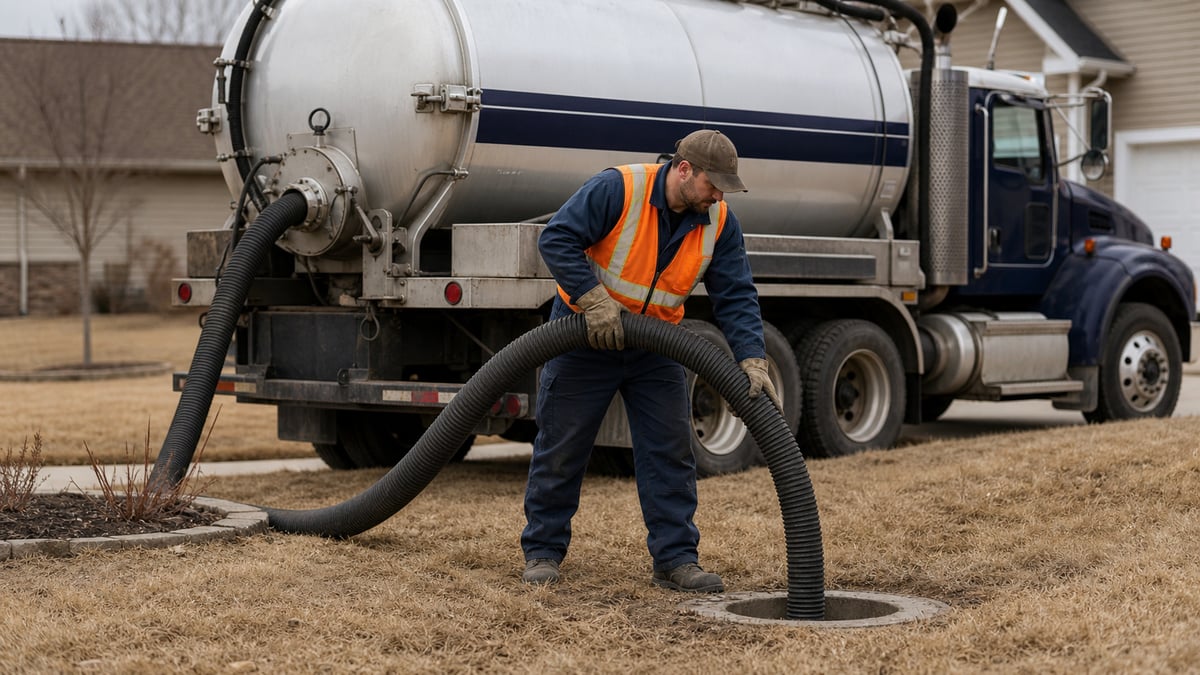
The best septic and liquid waste software in 2026 depends on how many service lines you run. For operators who want one system across septic and FOG, portable sanitation, roll-off, solid waste, and scrap and metal recycling, with a one-way final-invoice handoff to QuickBooks Online or QuickBooks Desktop, CRO is the strongest pick. ServiceCore is the established vertical specialist. Docket, Base Station, and Jobber fit different operating shapes, but buyers should test how each handles recurring pump-outs, load documentation, disposal details, and accounting before deciding.
Septic pumping isn't a single-visit business. A route runs on recurring pump outs, not one-off jobs: a tank due every 90 days, a grease trap on a monthly schedule, a commercial account with three tanks on three different clocks. Add the records required in the operator's jurisdiction, and the question stops being about scheduling and starts being whether the whole job, from dispatch to disposal record to paid invoice, stays connected. That's the lens we used to rank the five platforms below.
Recurring pump-out scheduling. We looked for solutions that handle recurring intervals automatically, so a tank due every 90 days lands back on the schedule without anyone remembering it.
Tank and job-site documentation. We looked for solutions that make it easier to capture the records the operator's jurisdiction requires, including photos, notes, service history, volume, destination, and receiving evidence where applicable.
Field to invoice. We looked for solutions with a path from a completed pump-out to a paid invoice without double entry, including dump fees and any extra charges the crew adds on-site.
QuickBooks fit. We looked for solutions that sync cleanly with QuickBooks Online, QuickBooks Desktop, or both, since plenty of septic operators still run Desktop.
Multi-service scalability. We looked for solutions that hold up if you run septic alongside portable sanitation, grease traps, or roll-off, since a lot of septic operators run more than one line.
Driver app and pricing model. We looked for an app drivers will actually use from the truck, with proof of service and photo capture, plus pricing that doesn't punish you for hiring more office staff as you grow.
Generic field-service features are not enough on their own. We weighted the ability to preserve a reliable record from the customer site through disposal and billing.
| Rank | Software | Best for | Recurring and compliance fit | Pricing |
|---|---|---|---|---|
| 1 |  CRO by RapidWorks CRO by RapidWorks |
Multi-service liquid-waste operators | Recurring schedules plus configurable job records | Base fee plus per truck; unlimited office users |
| 2 |  ServiceCore ServiceCore |
Septic and portable sanitation businesses | Recurring schedules plus septic job records | Per truck; no additional office-seat charge |
| 3 |  Docket Docket |
Waste fleets evaluating a liquid-waste workflow | Confirm both workflows in the demo | Quote-based |
| 4 |  Base Station Base Station |
Smaller waste businesses | Recurring schedules; confirm local records | Quote-based |
| 5 |  Jobber Jobber |
Small general field-service teams | Recurring work plus general forms and notes | Published tiered plans |
Every platform here puts some kind of app in the driver's hand. Recurring scheduling still needs to be confirmed in Docket's liquid-waste workflow, and the wider differences show up in disposal documentation and how directly each platform talks to QuickBooks.
Best for
Septic operators running more than one service line, or planning to add one.
Pricing
Flat base platform fee plus per truck, unlimited office users, quote-based
Rank 1
What it is. CRO is part of RapidWorks, the leading software platform for heavy equipment and site service companies. It connects dispatch, recurring service, field records, billing, and QuickBooks across septic and FOG, portable sanitation, roll-off, solid waste, and scrap and metal recycling.
Where it wins.
Where to look closely. CRO is a full operating system, so a one-truck startup running off a notebook will feel more setup here than in a lightweight app. Map the job fields and records your state or local authority requires before configuration, then test the complete load from dispatch through disposal and billing.
The verdict. Don't just take our word for it. Stewart Hoffman, owner of Hoffman Sanitation Services, runs trash, roll-off, portable toilets, and septic pumping on one CRO account: "We use CRO for everything, trash roll offs, portable toilets, pumping. They're all separate and they're all in CRO." Billing used to take "five or six of us about a week." Now, he says, it's "about four hours total. We send them to QuickBooks and it's done." If you want one system that runs septic alongside your other service lines and turns finished jobs into synced invoices without double entry, CRO is the strongest pick for 2026.
Best for
Septic-only or septic-plus-portables fleets that want an established specialist
Pricing
Per truck, quote-based, with no additional office-seat charge
Rank 2
What it is. ServiceCore is Denver-built software for portable restroom, septic, and roll-off companies, with a dedicated septic product built around tank details and 28-day recurring billing. It is an established specialist for septic and portable sanitation.
Where it wins.
Where to look closely. Demonstrate the exact records, map behavior, accounting handoff, implementation plan, and support model your operation needs. ServiceCore's current documentation supports unit-level identifiers, site association, and precise map pins, so test those capabilities against a representative site.
The verdict. A credible, established pick when septic and portable sanitation define the operation and its current unit-level workflow fits the way your crews work.
Best for
Operators whose liquid-waste work sits beside a roll-off or waste hauling operation
Pricing
Quote-based
Rank 3
What it is. Docket is waste operations software connecting scheduling, dispatch, drivers, customers, and billing.
Where it wins.
Where to look closely. Ask Docket to demonstrate the precise liquid-waste workflow you require, including volumes, disposal details, recurring service, and the resulting invoice. Do not infer regulatory fit from a general waste feature.
The verdict. A candidate for mixed waste operations when its liquid-waste workflow passes a hands-on demo against your documentation needs.
Best for
Smaller waste and service operators prioritizing straightforward daily operations
Pricing
Quote-based
Rank 4
What it is. Base Station provides operations software for waste and hauling businesses, bringing scheduling, dispatch, customer information, and billing together.
Where it wins.
Where to look closely. Treat septic and liquid waste as a specific acceptance test. Ask the vendor to show recurring pump-outs, multiple tanks at one site, disposal records, field exceptions, and QuickBooks behavior.
The verdict. Worth a look for a smaller operator when the full liquid-waste record survives the demo without manual side systems.
Best for
Very small septic operators who want simple, general scheduling and invoicing
Pricing
Tiered monthly plans, general field-service pricing, not septic-specific
Rank 5
What it is. Jobber is general field service management software used broadly across home service trades, not built specifically for septic or waste work.
Where it wins.
Where to look closely. Ask Jobber to demonstrate the exact pump log, tank-level history, disposal evidence, and jurisdiction-specific records your operation needs. Treat any requirement the demo does not prove as a workflow gap rather than assuming a general job form covers it.
The verdict. A reasonable start for a very small, septic-only operation with simple jobs. Reassess the fit when jurisdiction-specific documentation or a second service line enters the picture.
A lot of septic operators don't stay septic-only for long. Add portable toilets for a construction site or an event, and the question changes: can the platform track tanks and toilet units on the same job site, under the same customer, without two logins? CRO and ServiceCore both serve these verticals. CRO is built to keep septic, portable sanitation, roll-off, and recycling inside one platform. If portable sanitation is your primary line and septic is secondary, our portable sanitation software ranking digs deeper into that fit, including ServiceCore alternatives for portable sanitation.
Start with your service lines. A focused tool can be enough if you only run septic. Add portable sanitation, roll-off, or grease trap work, and a platform built to handle all of it saves you from stitching systems together later.
Follow the paperwork, not just the route. The real risk isn't a missed stop, it's a load nobody documented properly or a manifest requirement your county enforces. Ask every vendor to show you how a completed pump-out turns into a stored record.
Count the users, and test the claim. Per-user pricing punishes you for adding office staff as you grow; flat or per-truck pricing with unlimited users scales better. Before you buy, ask which records move to QuickBooks, whether Desktop is supported, which direction the handoff runs, and what remains in the accounting system.
For septic operators who also run portable sanitation, roll-off, or recycling, CRO is the strongest pick: one system, a one-way final-invoice handoff to QuickBooks Online or Desktop, and a driver app built for proof of service. ServiceCore is an established specialist for septic and portable sanitation. Docket and Base Station merit a workflow-specific demo for mixed waste operations, and Jobber fits very small operators who want simple scheduling.
For most septic operators, yes. Recurring pump-out billing, dump fees, and manifests need to land in the books without manual re-entry. Confirm whether a vendor supports QuickBooks Online, Desktop, or both, and exactly which records sync, before you assume "integration" covers what you need.
Recurring scheduling that rebooks itself, tank and location tracking across job sites, billing that flows straight from a completed pump-out to an invoice, documentation for manifests and dump fees, and a driver app crews will actually use. QuickBooks fit and per-truck, not per-user, pricing round out the list.
ServiceCore is a credible, well-known choice built for septic and portable sanitation. Its current documentation supports individual unit identifiers, site association, and precise map pins. Compare its full job record, accounting handoff, implementation plan, and support model against your requirements.
CRO is built for exactly this combination: one platform for septic and portable sanitation, with customer, site, unit, dispatch, and billing records that do not require separate systems. ServiceCore also serves both verticals and documents unit-level inventory and mapping, so compare both platforms on a representative multi-location site.
Documentation requirements vary by jurisdiction. Start with the records your state and local authority require, then configure software to capture the origin, amount, destination, receiving evidence, and any other required detail. Software can organize that evidence, but a vendor feature list does not determine compliance.
Bring a recurring route, the records your jurisdiction requires, and your QuickBooks setup. Schedule a demo with one of our septic experts today!