


Concrete Pumping
From boom pumping to telebelts, we help concrete placement teams deliver best-in-class service with every job.
/TEST%20icons/noun-concrete-pump-5976240.svg)
/Industry%20Icons/noun-5917380.svg)
/Industry%20Icons/noun-truck-4140346.png?width=60&name=noun-truck-4140346.png)


/TEST%20icons/noun-crane-truck-6830557.svg)
/TEST%20icons/noun-drilling-5103943.svg)


/Industry%20Icons/noun-road-fence-3990160.png?width=60&name=noun-road-fence-3990160.png)

/No%20Background/noun-maintenance-7409171-F1612C.png?width=60&name=noun-maintenance-7409171-F1612C.png)


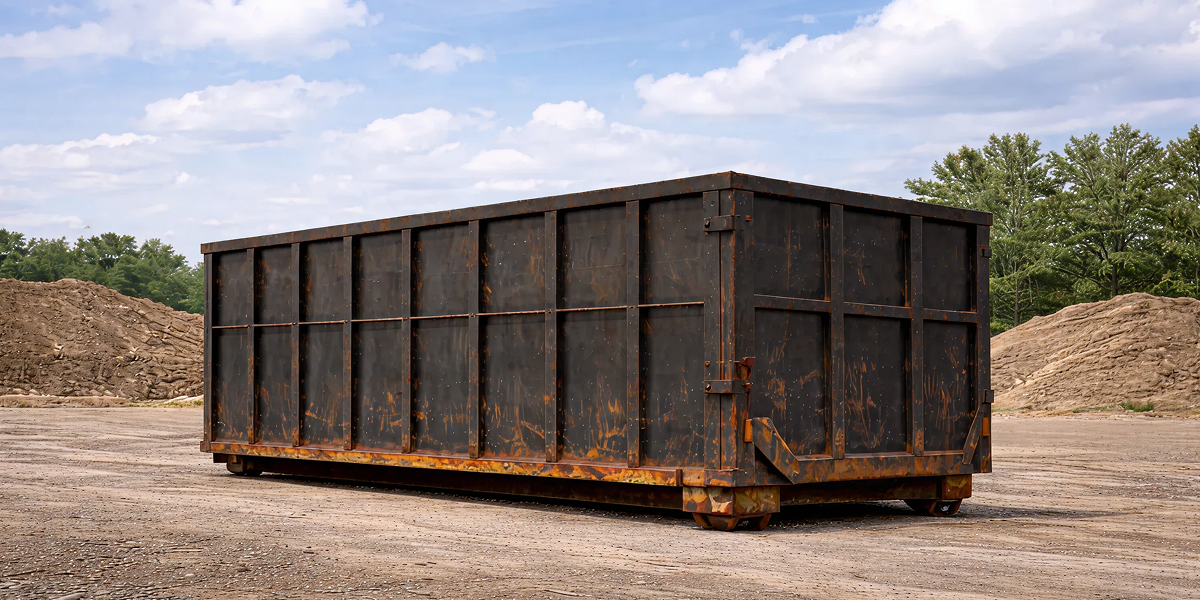
It starts small. A container gets dropped on a job site. The swap gets pushed back a few days. Someone at the office thinks dispatch handled the pickup. Dispatch thinks the driver confirmed it.
Three weeks later, you're on the phone with a customer who wants to know where their dumpster is — and you're not entirely sure.
This isn't a story about negligence. It's a story about visibility. And for roll-off operators running 50, 100, or 500+ containers across active jobs, the gap between "I think it's there" and "I know exactly where it is" costs real money.

A roll-off container is a $5,000–$15,000 asset. When it's on an active job generating revenue, it's working. When it's sitting on a customer's lot for an extra three weeks because no one flagged it for pickup, it's not.
The financial hit is obvious. But the operational ripple is what really grinds things down:
As operations grow, the problem compounds. More containers, more drivers, more job sites — and the same whiteboard or spreadsheet trying to keep up with all of it. At some point, the system fails. The question is just how expensive that failure gets before something changes.
The honest answer: most roll-off operators know this is a problem. They've just gotten used to managing it.
Spreadsheets and phone calls aren't ideal, but they're familiar. And the generic software options — built for plumbers and HVAC techs — don't map to the way a roll-off operation actually works. There's no concept of a container sitting on a lot, a swap workflow, a dump destination, or a dry run fee. So operators either fight the software to make it fit, or they give up on it and go back to the whiteboard.
What most haven't seen yet is software built specifically for how they operate — where container tracking, dispatch, field documentation, and billing are all connected in one place, designed around the roll-off workflow from the ground up.
When container tracking is done right, the operational picture changes fast.
Instead of calling drivers to find out where a container is, the dispatcher pulls up a live view and sees exactly which containers are deployed, which jobs they're on, and how long they've been sitting. If a container has been on-site for 21 days with no activity, it shows up on a report — and someone makes a proactive call before the customer even realizes they need a swap.
Drivers close jobs from their phone. Drop-off confirmed. Swap documented. Photo captured. Any add-on fees — overage, extended rental, special disposal — logged at the job site before the truck leaves. By the time the driver is heading to the next stop, the invoice is already building itself.
Dry runs get documented with a reason and a photo before the driver can mark the job failed. The dispatcher sees it immediately, reschedules the job, and the dry run charge is captured — with the paper trail already in the system.
And at the back office, the billing admin isn't chasing down what happened in the field. She's looking at completed jobs that already have everything she needs to invoice.
This is what it looks like when dispatch, field execution, and billing are connected — not bolted together with phone calls and hope.
CRO was built by people who came from this industry. It's not a generic field service tool adapted for roll-off — it's a platform designed around the way roll-off operations actually work.
Here's what that looks like in practice:
Container visibility in real time. Every container on the CRO platform is tracked — deployed, idle, or in transit. Dispatchers can see what's out, where it is, and how long it's been there. Running a report on your oldest assets takes seconds, not a spreadsheet audit.
"Before CRO, we were losing cans and that's not going to fly. If an asset sits for months, that's money lost. Now I can run a report to see where my oldest cans are." — Ryan, ACME Roll-Off Company
Drag-and-drop dispatching. Routes are built visually. Jobs can be reassigned mid-day when something changes in the field — without rebuilding the whole schedule. Drivers get updated assignments directly in the app.
Driver app that closes the loop. Drivers document drop-offs, swaps, and pickups from their phone — with photos, notes, and customer signatures captured at the job site. Add-ons and fees get logged before the truck leaves. Nothing falls off the invoice.
Failed job documentation. CRO requires drivers to record the reason and upload a photo before a job can be marked failed. Dispatchers see it immediately. The dry run is documented and the job is back on the schedule — with the evidence already on file.
Automated invoicing tied to job completion. When a job closes, the invoice builds itself — including every line item the driver added in the field. It syncs directly to QuickBooks without anyone retyping a thing.
The result isn't just fewer lost containers. It's an operation where dispatch, drivers, and billing are all working from the same information — and no one is managing by gut feel.
Every container that sits idle longer than it should, every dry run that goes undocumented, every invoice that's delayed because billing is waiting on the field — these are real dollars. Not theoretical ones.
The operators who track containers well don't just protect their assets. They run faster routes, invoice sooner, collect faster, and spend less time on the phone trying to figure out what's happening in their own operation.
If you're still managing container tracking on spreadsheets or callbacks, the cost isn't visible yet. But it's there.
We put together a practical, step-by-step guide for roll-off operators who want to get control of their containers — covering routing, field documentation, team alignment, and more.

No fluff. Just the operational framework that the best roll-off teams use to stay in control as they grow.