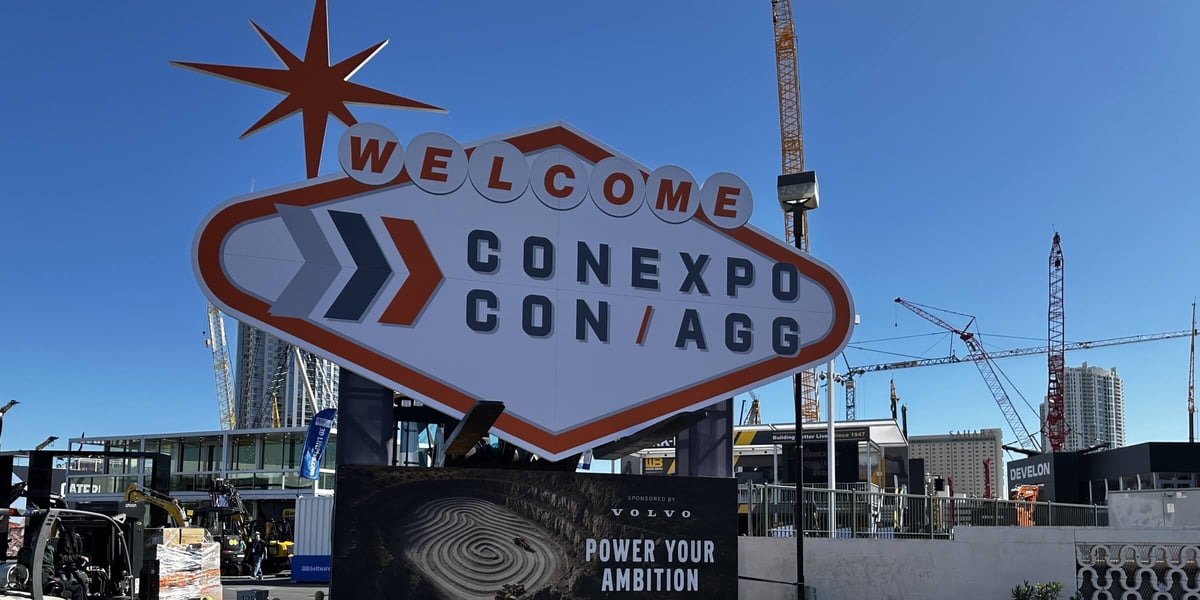
Last week the RapidWorks team packed our bags and headed to Las Vegas for CONEXPO-CON/AGG 2026, one of the biggest gatherings in the construction industry.
Every three years, contractors, fleet owners, equipment manufacturers, and technology providers gather here to talk about what’s working today and what the next era of the jobsite will look like. The show brought together 2,000+ exhibitors and more than 150 education sessions across nearly 2.9 million square feet of exhibit space.
While walking the show's floor was impressive, many valuable insights also came from the Ground Breakers Stage, where industry leaders shared their perspectives on how construction is evolving.
After sitting in on several sessions and talking with people on the show floor, a few themes kept showing up again and again.
Here are five takeaways from CONEXPO 2026 that stood out the most.
1. The Connected Jobsite Is Becoming the Standard
One of the biggest themes across the keynote sessions was the idea of the connected jobsite.
Construction companies are increasingly linking together their equipment, vehicles, and jobsite operations through digital systems. The goal is simple: see what’s happening across the entire operation in real time.
During a keynote session from Geotab, CEO Neil Cawse described how contractors are looking for one place to see all connected assets across their business.
Instead of running fragmented systems, companies want a single view of the jobsite, where they can understand which machines are working, which are idle, and which might be creating safety risks.
For companies managing large fleets of equipment, this kind of visibility is quickly becoming a necessity.
When dispatchers, operators, and managers can see the same information at the same time, it becomes much easier to keep jobs moving.
2. Why Construction Companies Want Simpler Data Insights
Another recurring theme heard throughout the event: data alone doesn’t solve problems.
Telematics systems, equipment sensors, and jobsite software are generating more information than ever before. But many companies still struggle to turn that information into decisions they can act on quickly.
Speakers pointed out that the next phase of construction technology isn’t just about collecting data. It’s about making it easier to understand and use.
Managers want simple answers to everyday operational questions:
- Which trucks are sitting idle right now?
- Which machines are working hardest?
- Which jobs are running behind schedule?
- Which assets might need maintenance soon?
The future isn’t about drowning teams in dashboards. It’s about delivering the right information at the right moment, especially for people working in the field.
When shopping for technology, be sure that your choice offers you the right information and capabilities to improve efficiency instead of overloading you with too much data.
3. How AI Is Starting to Impact Construction Operations
Artificial intelligence came up in several conversations throughout the week.
But the conversation has shifted.
A few years ago, the industry talked about AI as something that might help construction someday. At CONEXPO 2026, the focus was on how it’s already being used today.
Examples shared during sessions included:
- Predicting equipment failures before they happen
- Automating routine reporting and analysis
- Using machine intelligence to improve jobsite safety
- Helping teams identify inefficiencies in operations
In other words, AI isn’t replacing workers. It’s helping them spot problems faster and make better decisions with resources they already have.
The message from speakers was clear: companies that learn how to use these tools effectively will gain a serious advantage.
4. Many Construction Workflows Still Run on Paper
Despite the technology on display at CONEXPO, many companies admitted that day-to-day workflows still rely heavily on paper, phone calls, and spreadsheets.
Think about how many common processes still happen manually:
- Service requests written on paper
- Equipment issues called in over the phone
- Dispatch decisions made with whiteboards
- Maintenance logs stored in filing cabinets
The result?
Delays, miscommunication, and a lot of time spent tracking down information.
Across the sessions and conversations on the show floor, there was a growing sense that contractors are actively looking for better ways to manage these workflows. Many are starting to adopt digital tools designed specifically for field operations to reduce those everyday headaches.
Solutions like RapidWorks are built around exactly that challenge: helping teams replace manual processes with simple, purpose-built tools that keep everyone on the same page.
5. Technology Must Work for the People Using It
One final theme stood out across the keynote sessions: technology only works if crews actually use it.
Construction companies are still facing workforce challenges, including labor shortages and an aging workforce. Because of that, new tools need to be simple enough for teams in the field to adopt quickly.
Operators don’t want complicated systems that slow them down.
They want tools that make their day easier—things like:
- Job details available on their phone
- Directions to the next jobsite
- Easy ways to log hours and job tickets
- Clear communication with dispatch
When technology works the way crews actually work, adoption happens naturally.
The companies that succeed in the next decade won’t just adopt new tools, but they’ll use them to support the people doing the work every day.
Looking Ahead: The Future of Construction Operations
If there’s one big takeaway from CONEXPO-CON/AGG 2026, it’s this:
The construction industry isn’t just experimenting with technology anymore—it’s figuring out how to apply it to real operational problems.
From connected equipment and telematics to AI-driven insights and digital job management, companies are searching for practical ways to run their businesses more efficiently.
And while the technology itself is impressive, the real goal is simple:
Help contractors keep equipment moving, keep crews productive, and keep jobs on schedule.
After a week of conversations, demos, and keynote sessions, one thing is clear: The next era of the job site is already underway.



/TEST%20icons/noun-concrete-pump-5976240.svg)
/Industry%20Icons/noun-5917380.svg)
/Industry%20Icons/noun-truck-4140346.png?width=60&name=noun-truck-4140346.png)


/TEST%20icons/noun-crane-truck-6830557.svg)
/TEST%20icons/noun-drilling-5103943.svg)


/Industry%20Icons/noun-road-fence-3990160.png?width=60&name=noun-road-fence-3990160.png)

/No%20Background/noun-maintenance-7409171-F1612C.png?width=60&name=noun-maintenance-7409171-F1612C.png)